01Assess the visible pattern, ventilation provision and relevant environmental conditions.
02Check the performance of accessible mechanical extraction where appropriate.
03Consider cold bridging, heating patterns and leaks rather than attributing every problem to lifestyle.
Understanding damp · Moisture and salts
What are hygroscopic salts and salt contamination?
Hygroscopic salts are salts that attract and absorb water vapour from the surrounding air. If they are present in masonry or plaster, they can make the material damp as indoor humidity rises—even when there is no new leak. “Atmospheric moisture” simply means moisture in the air around the wall.
How does salt contamination happen?
Salts may come from ground moisture, historic chimney deposits or materials within the building. Liquid water can dissolve soluble salts and move them through porous materials. When that water evaporates, salts remain within the wall or at its surface: this is salt contamination.
Certain chlorides, nitrates and sulphates are hygroscopic, but not all salts absorb moisture in the same way. At sufficiently high humidity, some take up enough water to dissolve; this is called deliquescence. The conditions depend on the salts, their mixture and temperature—not one humidity limit that applies to every wall.
Liquid water can transport dissolved salts; water vapour does not carry those dissolved salts through the wall. Once deposited, hygroscopic salts can absorb moisture from the air locally.
Absorbing humid air is not the same as condensation.
Hygroscopic salts take up water vapour from the surrounding air. Condensation is a separate process: it forms when conditions at a surface reach the dew point and vapour becomes liquid water. Salt-contaminated plaster can therefore develop damp-looking patches without that surface first reaching the dew point.
Both problems can occur together and may worsen when indoor humidity is high. Improving ventilation and moisture control can help, but it does not remove salts from plaster. Not every mould patch is caused by salts, and not every white deposit is mould: temperature, humidity, the wall construction and the materials need assessing together.
What signs can salt contamination cause?
Possible signs include recurring damp-looking patches, powdery or crystalline deposits, flaking paint and deteriorating plaster. Repeated salt crystallisation can damage porous finishes. A visible white deposit is often called efflorescence, but it does not identify the salt or prove that it is hygroscopic.
Salts can also influence electrical moisture-meter readings. We interpret readings alongside the building’s history, moisture sources and environmental conditions; material sampling or further testing may be needed. Depending on the findings, repairs can include removing contaminated finishes or specifying a suitable salt-isolation system—not simply another skim of plaster.
Further guidance: SPAB: Control of Dampness, including hygroscopic salts and the importance of distinguishing moisture sources.
Real condensation and mould photographs
Recognising the signs. Investigating the conditions.
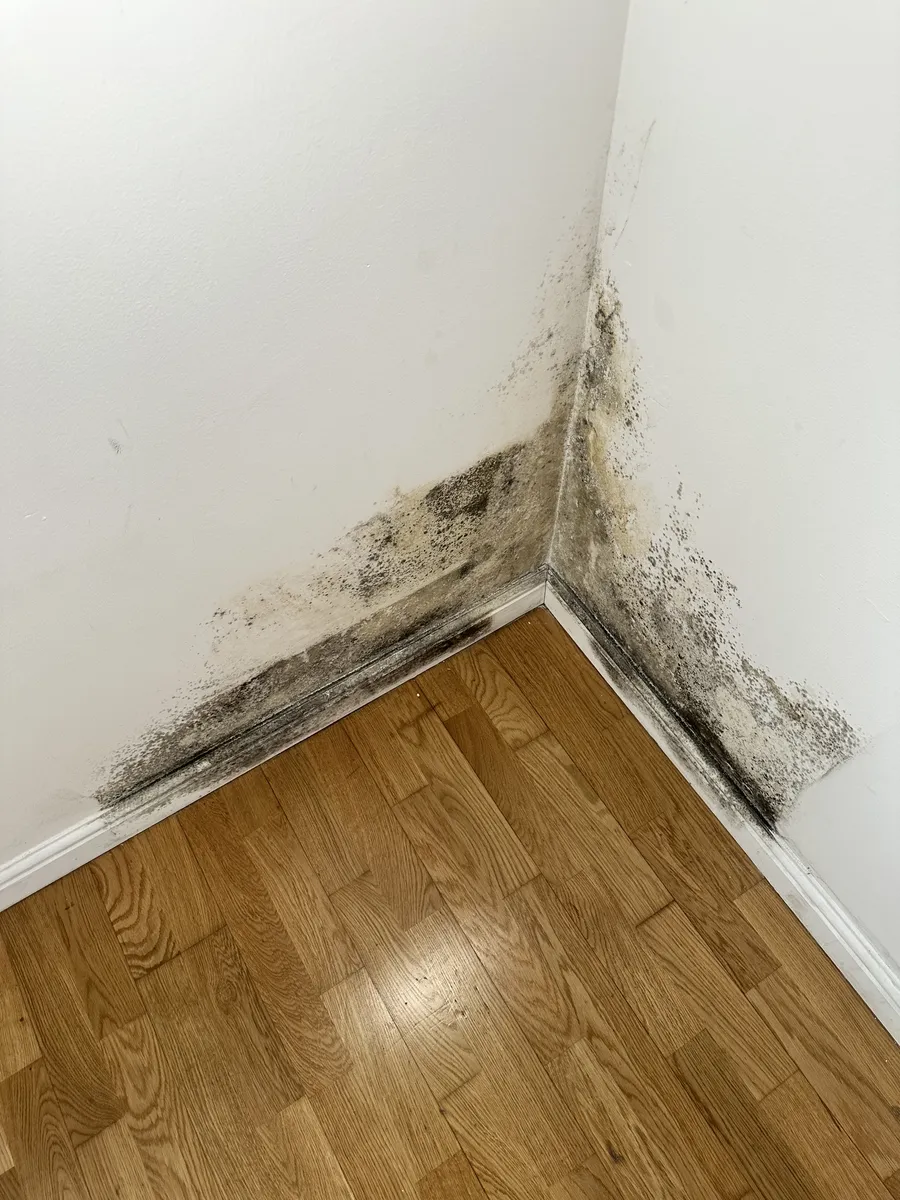
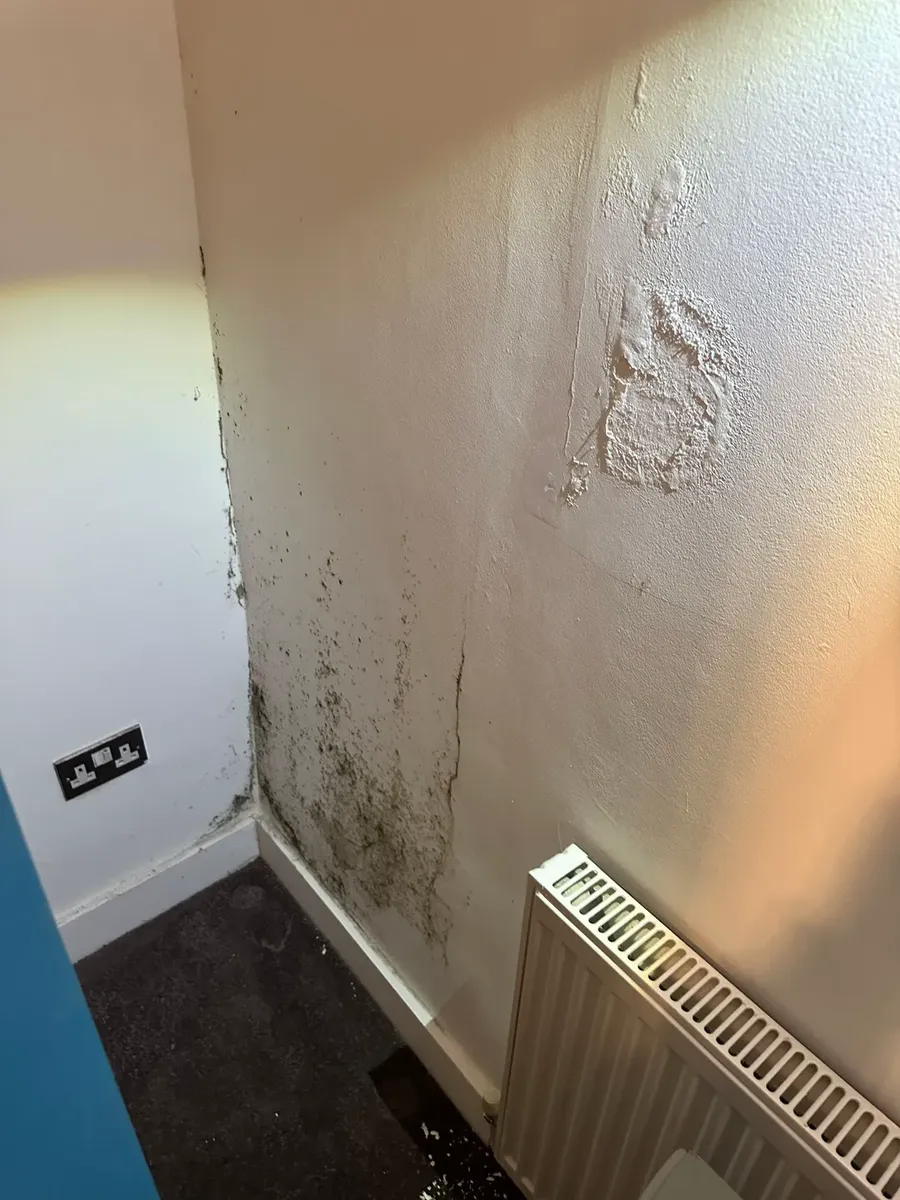
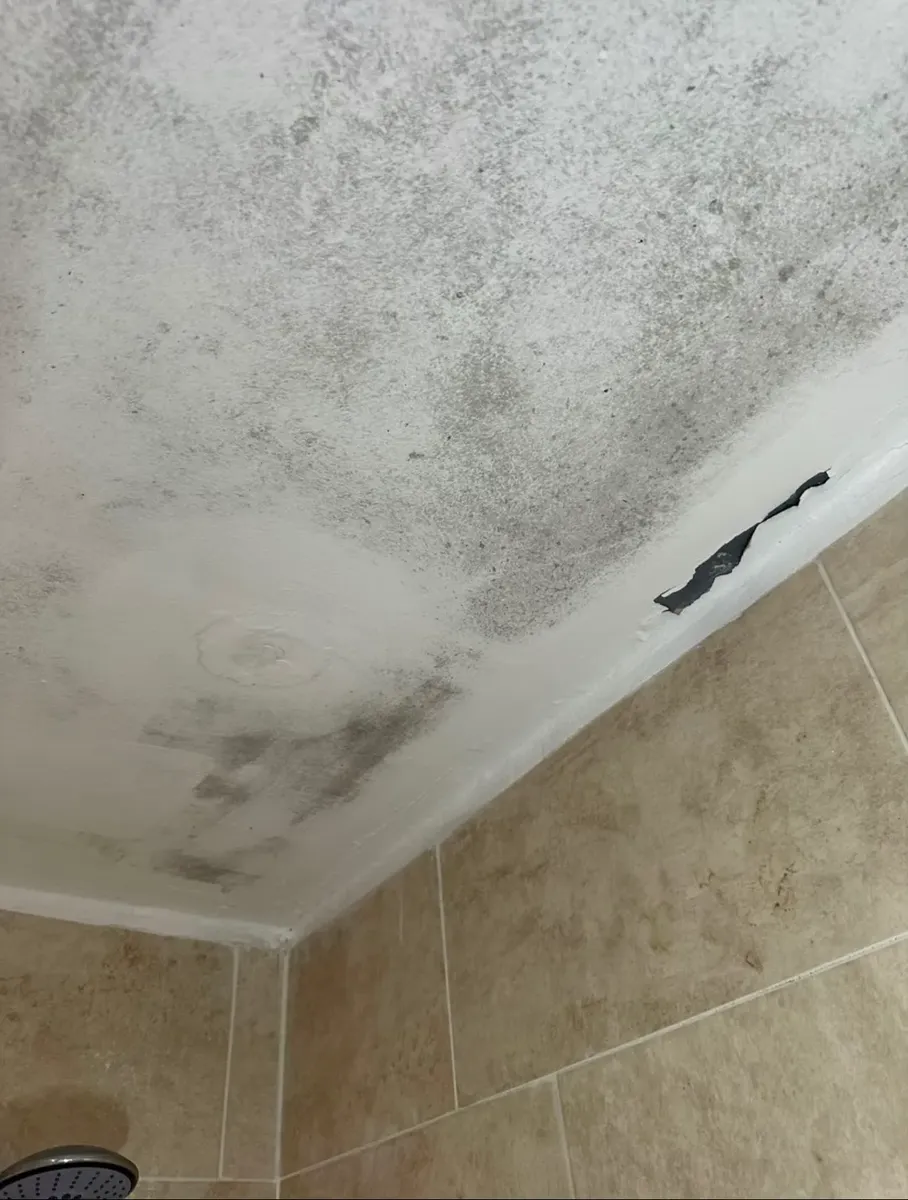
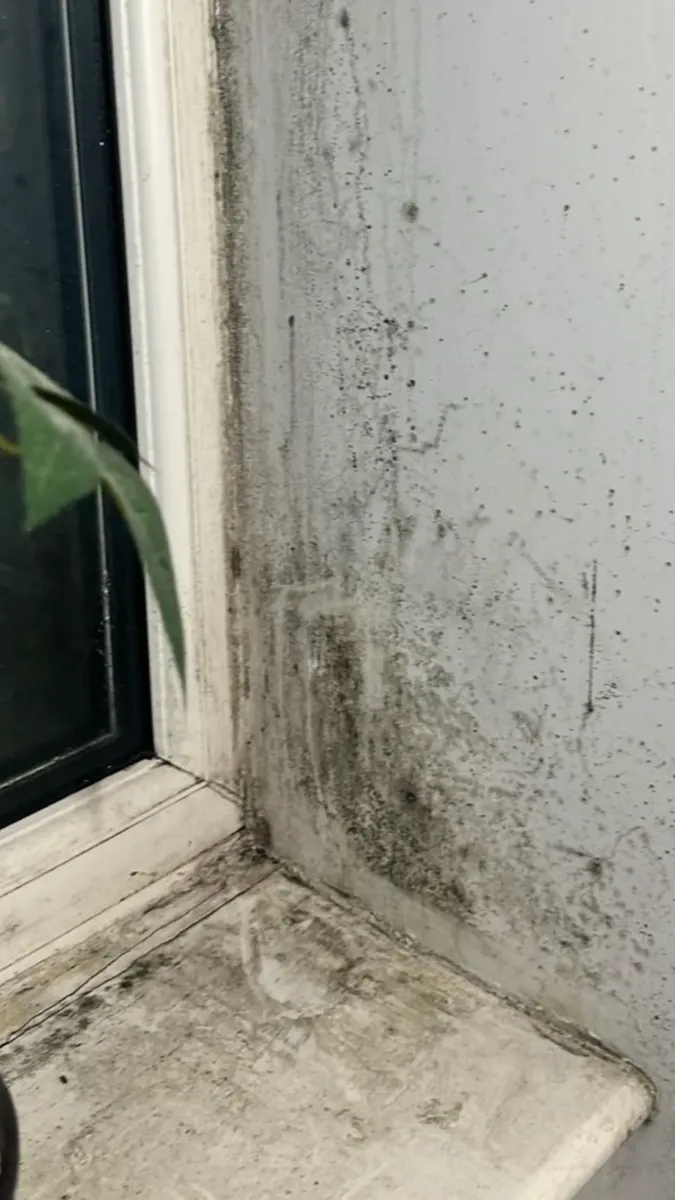
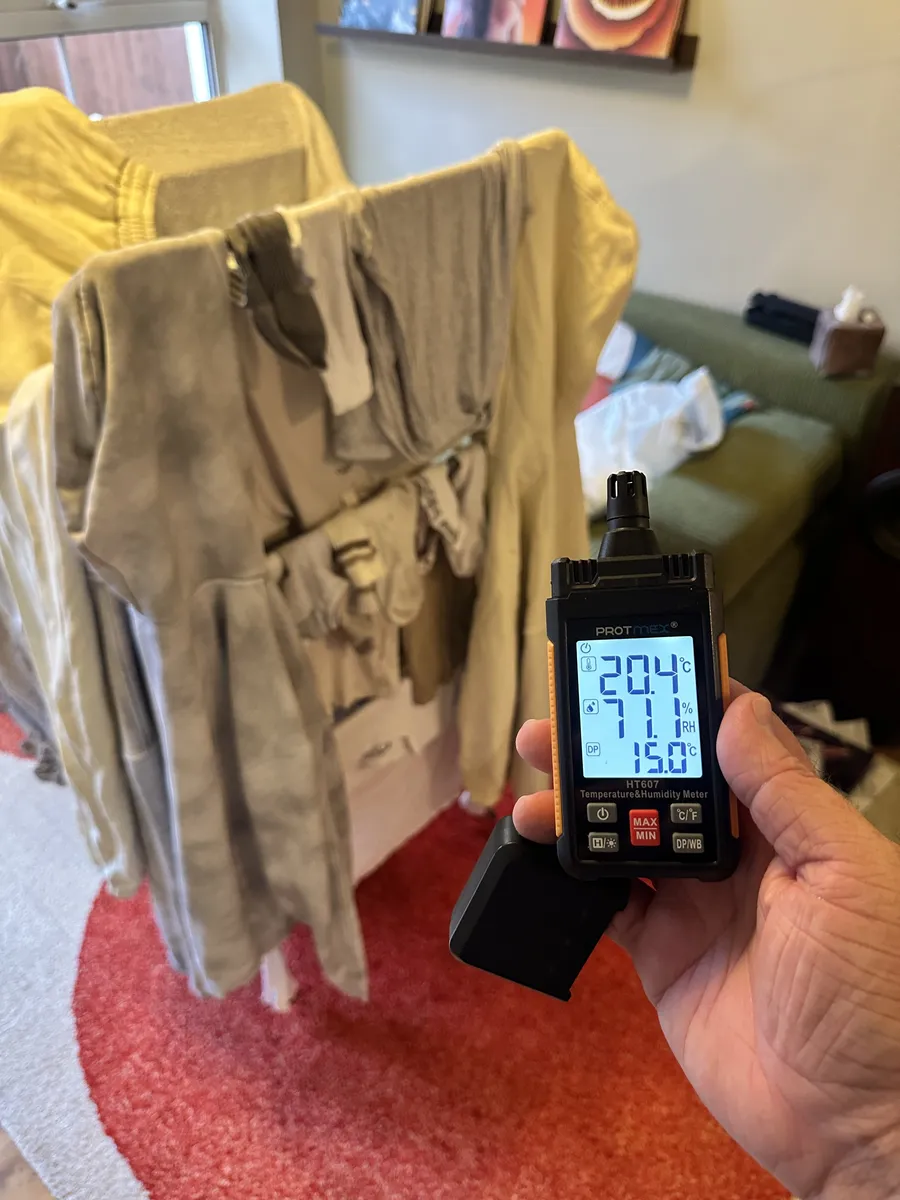
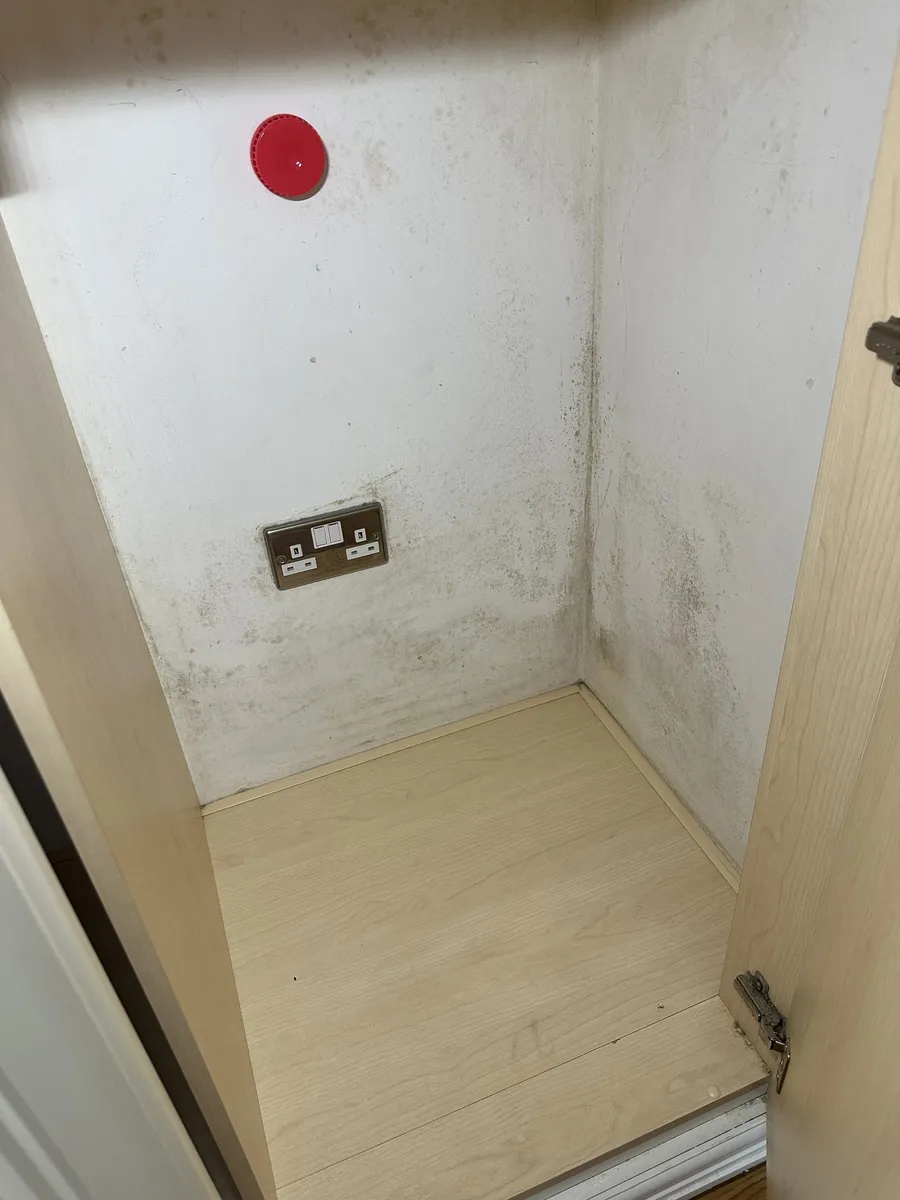
Examples from our work show mould on walls, ceilings, window surrounds and inside a cupboard, alongside an indoor humidity check. An investigation considers ventilation, temperature, moisture sources and the building—not just the visible marks.
Mould on a wall and corner
The distribution of mould and the condition of the finishes are recorded as part of the inspection.
Bathroom ceiling mould
Bathroom investigations consider moisture production, surface temperatures and whether extraction is effective.
Mould around a window
Cold window surrounds can be vulnerable when humid indoor air meets a sufficiently cold surface.
Checking indoor conditions
Temperature and relative humidity are considered alongside ventilation and moisture sources. Indoor clothes drying can add moisture, but the wider building conditions still need assessment.
Mould in an enclosed space
Enclosed spaces can have limited air movement. We consider airflow and cold surfaces rather than simply cleaning or painting over the marks.
Mould near skirting level
Low-level mould does not, by itself, establish rising damp. Its pattern is assessed with other evidence to investigate the moisture conditions.
These photographs are illustrative examples, not a before-and-after sequence. The cause of each patch cannot be established from appearance alone; leaks and other moisture sources also need consideration.
Survey video · Forest Hill
What are trickle vents—and are they providing enough ventilation?
Trickle vents are small, usually adjustable openings in a window frame or another part of the external envelope. They provide background ventilation while the window is shut. They are one part of a ventilation system, not a substitute for effective moisture extraction.
At this Forest Hill property, fitted trickle vents were not providing enough airflow for the conditions identified during the survey. Press play to watch with sound. The clip illustrates the inspection; it is not a measured airflow test.
A fitted vent is not the same as effective ventilation.
We check the opening through the frame and the outside cover—not just whether a grille has been fitted inside. A restricted, obstructed or incomplete route can limit the air that passes through. The vent’s effective opening matters more than its visible length.
A clear route outdoors: is the vent correctly installed, open, clean and unobstructed on both sides?
Enough background ventilation: do the vent provision and distribution suit the rooms, occupancy and ventilation system? Airflow also varies with wind and pressure differences.
Working extraction: do kitchen and bathroom fans remove moist air outside effectively, with suitable controls and running times?
A route between rooms: can replacement air reach the rooms being extracted from? We assess internal air paths without compromising fire safety.
Why can condensation and mould still occur?
Cooking, bathing, breathing and drying laundry release water vapour. If moisture builds up and a wall, window or other surface is cold enough, the air at that surface can reach its dew point and condensation can form. Persistently high surface humidity can also support mould without obvious droplets.
Trickle vents alone may not remove moisture quickly enough, particularly where extraction is missing or ineffective. Cold surfaces, heating patterns, insulation defects and water ingress may also contribute. We assess humidity, temperature, surface conditions and ventilation together rather than assuming that fitting more vents will solve every problem.
Keep existing vents maintained and use them as intended for the ventilation system. Do not block them to hide draughts or enlarge openings without advice. Any alterations should suit the building, the manufacturer’s instructions and applicable ventilation requirements.
What does Part F mean for ventilation in your home?
Official guidance checked . Edition and transitional arrangements must be checked for each project.
Part F of the Building Regulations in England concerns ventilation. Requirement F1 calls for adequate means of ventilation for people in the building. Approved Document F gives practical guidance on meeting the requirements; it is not the law itself, and alternative compliant designs can be used.
Which edition applies now?
At the date checked, the 2021 edition of Approved Document F, Volume 1: Dwellings remains the generally applicable guidance for current dwelling projects, subject to any applicable earlier transitional arrangements. The correct requirements depend on the work, the relevant application or notice and the transitional provisions—not simply the date a web page was published.
A 2026 edition has been published, but it takes effect on 24 March 2027 for building work not connected with higher-risk building work, and 24 September 2027 for higher-risk building work. Transitional protections may preserve earlier standards for qualifying projects. The publication of a newer edition does not automatically make it applicable to every job today.
Ventilation is a system—not just a fan or a trickle vent
Extraction: remove moisture and pollutants from kitchens, bathrooms and other wet rooms to outside. A recirculating cooker hood alone does not provide extract ventilation to outside.
Whole-dwelling ventilation: provide suitable fresh-air supply through background ventilators or a designed mechanical system.
Purge ventilation: provide a way to remove occasional high concentrations of pollutants or water vapour, commonly through suitable openable windows or a designed alternative.
Air transfer: allow air to reach the rooms being extracted from. Alterations to doors or other air paths must also respect fire safety and the building’s design.
Common intermittent extract rates in the 2021 dwelling guidance
Table 1.1 gives the following minimum rates for intermittent extract systems. These are not continuous-system rates and do not, by themselves, establish that the whole dwelling complies.
Bathroom
15 litres/second
Kitchen with a cooker hood extracting outside
30 litres/second
Kitchen without an externally extracting cooker hood
60 litres/second
Utility room
30 litres/second
Sanitary accommodation (for example, a separate WC)
6 litres/second
Kitchen hood position and coverage matter; see the full table and diagrams. The guidance permits purge ventilation as an alternative for sanitary accommodation in the circumstances described. Continuous systems have different rates and whole-dwelling design requirements—do not select or assess them using this list alone.
What about existing homes and replacement windows?
Part F is relevant where work falls within the Building Regulations, including relevant ventilation work, window replacement and alterations. It does not mean every untouched older home must automatically be rebuilt to the latest new-dwelling specification. The 2021 guidance includes specific provisions for existing homes.
Replacing windows or improving airtightness must not leave ventilation less satisfactory under the applicable rules. Existing background ventilators should be retained in accordance with the replacement-window guidance, and additional provision may be needed where old windows had none. The appropriate solution depends on the ventilation system; “every window always needs the same trickle vent” is not an accurate rule.
Installation, testing and handover matter
Mechanical ventilation must be commissioned as required. The 2021 guidance covers measured airflow, controls, ducting, inspection records and operating instructions; new dwellings have specific airflow measurement and notification requirements. A fan’s advertised capacity is not proof of the airflow achieved once ducting and external terminals are installed.
Our survey can investigate ventilation concerns and report findings. It does not automatically provide building control approval, certify a whole-home ventilation design or confirm that every aspect of Part F has been met. Where required, use an appropriately competent designer or installer and the relevant building control process.
Official guidance checked . This section describes the position at that date.
Awaab’s Law sets enforceable timeframes for social landlords in England to investigate and address specified hazards. It is named after Awaab Ishak, who died following prolonged exposure to mould in his home. Its first phase came into force on 27 October 2025, covering all emergency hazards and significant damp and mould hazards.
Social housing—not a universal deadline for every landlord
The current rules cover registered social housing providers, including council and housing association landlords. Whether damp or mould is a significant or emergency hazard depends on the circumstances and the risk to the occupants; not every small patch automatically falls into the same category.
At the date checked, extending Awaab’s Law to private rented tenancies and accommodation occupied under licence is the subject of a government consultation running from 9 October to 18 December 2026. Do not assume the social housing deadlines already apply to every private letting. Private landlords still have separate repair and fitness obligations.
Key timeframes under the current social housing rules
Emergency hazards
Investigate and, where an emergency hazard is identified, complete the relevant safety work within 24 hours of becoming aware of it. Both investigation and safety work must fit within that period.
Potential significant damp and mould hazards
Investigate within 10 working days of becoming aware of the potential hazard. The assessment must consider the risk to the people living in the home.
Written findings
Provide the tenant with a written summary of the investigation findings within 3 working days of the investigation concluding, subject to the requirements and exceptions in the official guidance.
Making a significant hazard safe
Complete the relevant safety work within 5 working days of the investigation concluding. This is not a blanket deadline for completing every longer-term repair.
Preventing recurrence
Begin, or take steps to begin, supplementary preventative work within 5 working days. Where it cannot start within that period, work must physically begin as soon as reasonably practicable and within 12 weeks, then be completed within a reasonable time.
If the home cannot be made safe in time
The landlord must secure suitable alternative accommodation at its expense where the relevant safety work cannot be completed within the required timeframe. Tenants must be kept informed throughout.
These are maximum statutory timeframes, not permission to delay action where the risk requires a faster response. The landlord’s obligations begin when it becomes aware of the potential hazard; arranging an external survey does not pause the clock.
The next phase is scheduled—not already in force
Official guidance states that Phase 2 starts on 30 November 2026, extending the significant-hazard requirements to additional hazards such as excess cold and heat, falls, structural collapse, fire, electrical hazards and domestic hygiene. Until then, the Phase 1 guidance remains applicable. Check the live government guidance for the rules on the date a concern arises.
Find the cause, document the evidence and prevent recurrence
Cleaning or painting over mould alone may leave the cause unresolved. A useful investigation considers leaks, the building fabric, heating, ventilation and indoor conditions, alongside the occupants’ circumstances. Photographs, measurements and a clear repair sequence can support decisions and follow-up—but a survey report is not an Awaab’s Law compliance certificate or a substitute for the landlord taking timely action.
If you are a tenant, report damp or mould promptly to your landlord and explain any health concerns or vulnerable occupants. Keep a record of the report, photographs and responses. Do not wait for a routine survey appointment where there is an immediate safety risk; use the landlord’s emergency reporting route.
Plasterboard over a damp wall: why patches can return.
Covering damp masonry with dot-and-dab plasterboard does not repair the source. Read how liquid moisture and dissolved salts can affect the finish, why condensation and mould can develop behind a lining, and when damaged boards need replacing.
An underpowered extractor was identified during a survey, replaced during the works, then tested and commissioned. See the fan photographs and recorded airflow readings.
Investigating interstitial condensation in Fulham.
A separate survey finding linked ongoing condensation and moisture build-up to missing mechanical ventilation and high indoor humidity. The photographs show investigation of the floor layers and moisture checks, not a completed repair.
This project involved insulation, reboarding and plastering to address cold bridging and condensation. The photographs show the strip-out, insulation and reboarding stages.
Is recurring mould always caused by how someone uses the home?
No. Ventilation provision, cold surfaces, heating, occupancy and leaks can all affect moisture conditions. The investigation considers the building as well as its use; it does not automatically attribute a mould problem to lifestyle.
Do you check whether extractor fans are working effectively?
Where appropriate and accessible, we assess mechanical extraction and can measure airflow. A fan making a noise is not proof that it removes enough moist air. The findings are considered with the property layout and other ventilation provision.
Is cleaning visible mould enough?
Cleaning may remove visible growth, but mould can return if the underlying moisture conditions remain. The survey focuses on identifying those conditions and practical next steps. Seek specialist advice for extensive mould and medical advice if you are concerned about symptoms.
Full damp & timber survey
Start with a survey for condensation & mould.
A proper investigation and a photographic written report — so whatever you spend next is spent on the actual cause. Contact us to discuss the current survey fee and availability.