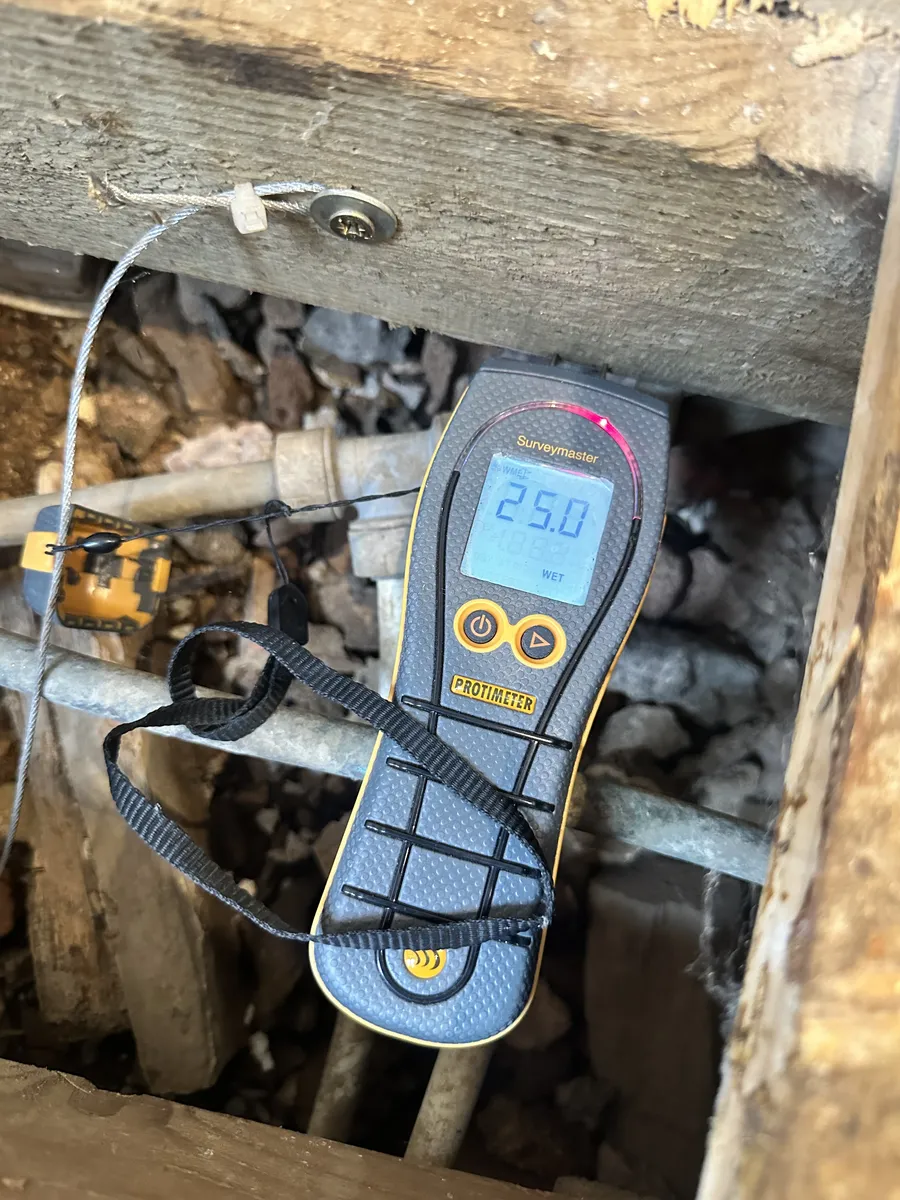
Damp conditions around floors, joists or skirtings
How we approach it
01Assess visible and accessible timber without implying concealed areas have been inspected.
02Consider ventilation, leaks and other moisture sources affecting the structure.
03Recommend further access, repairs or treatment only where the findings support it.
Survey video · Subfloor ventilation
What should an air brick serving a subfloor actually do?
An air brick should provide a clear ventilation route from outside into the void beneath a suspended timber floor. A grille that looks open on the face is not enough if the route behind it is blocked or ends in the wrong space.
This clip shows inspection of an air brick opening. It helps explain why we consider the route through the wall, not just the appearance of the vent. Checking an opening alone does not establish airflow throughout the subfloor or the condition of concealed timber.
What we look for
A clear connection to the subfloor: the vent needs to reach the intended void beneath the floor, not simply open into a wall cavity or finish against an obstruction. Sleeves or ducts may be needed where the construction requires them.
A route for air to circulate: appropriately positioned vents should allow cross-ventilation. Internal sleeper walls, later additions or stored debris can interrupt that route even when external grilles are clear.
Suitable positioning and outside levels: vents should not be buried by paving, soil or render. Their height and detailing need to suit the floor and surrounding drainage without creating a route for surface water to enter.
Open, maintained ventilation: paint, vegetation, debris or unsuitable alterations can restrict the openings. Any grille or pest protection should remain suitable for its purpose without unduly restricting airflow.
Why this matters for timber
Air movement helps the subfloor dry. Restricted ventilation can allow moisture to persist, increasing the risk of fungal decay where timber remains damp. Ventilation is only part of the investigation: leaks, rainwater discharge, ground levels and other moisture sources still need attention.
This is an inspection example, not a ventilation performance certificate or proof that the whole floor void is clear. The appropriate vent arrangement depends on the building. Do not drill, probe or alter vents without considering concealed services, drainage and the construction.
Inspecting an air brick opening and considering its connection to the subfloor. Press play to watch with sound.
Wandsworth · Real survey photographs
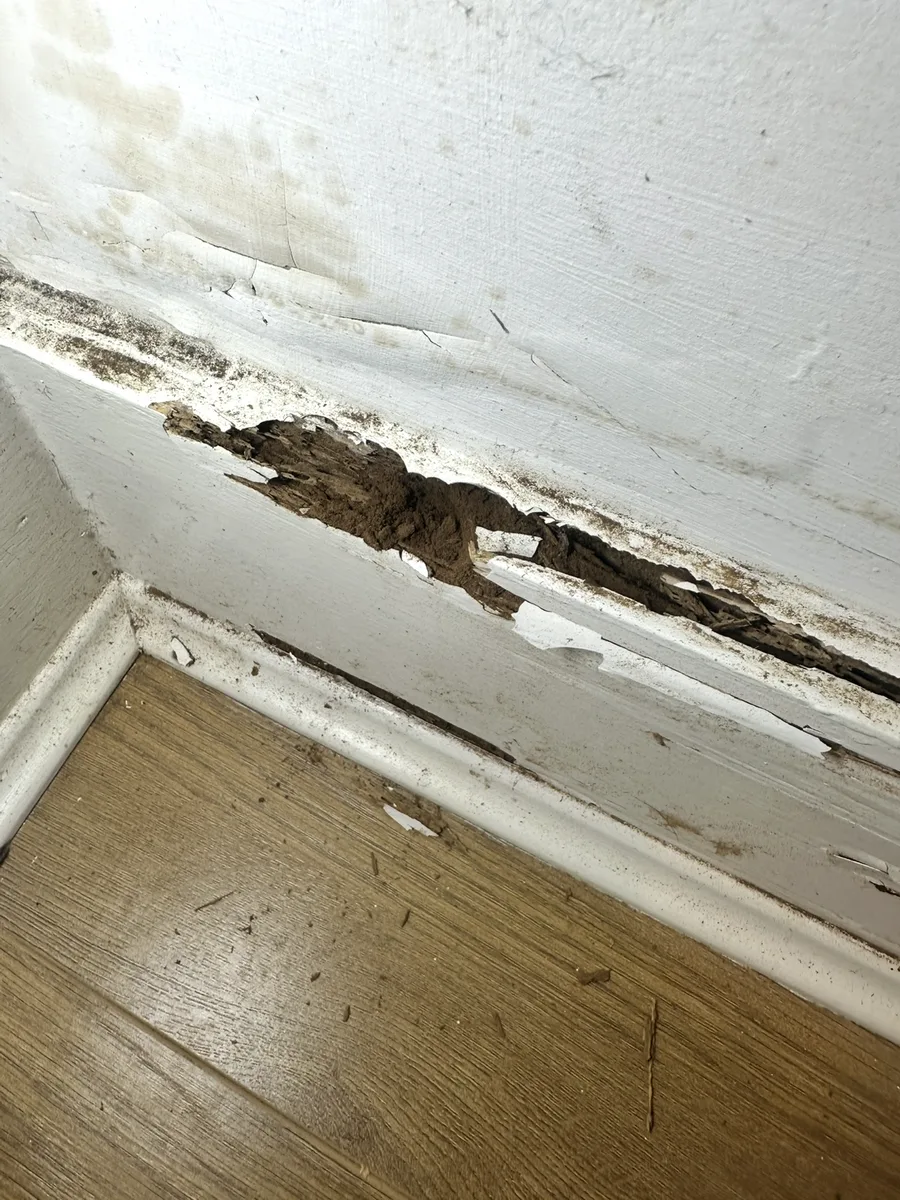
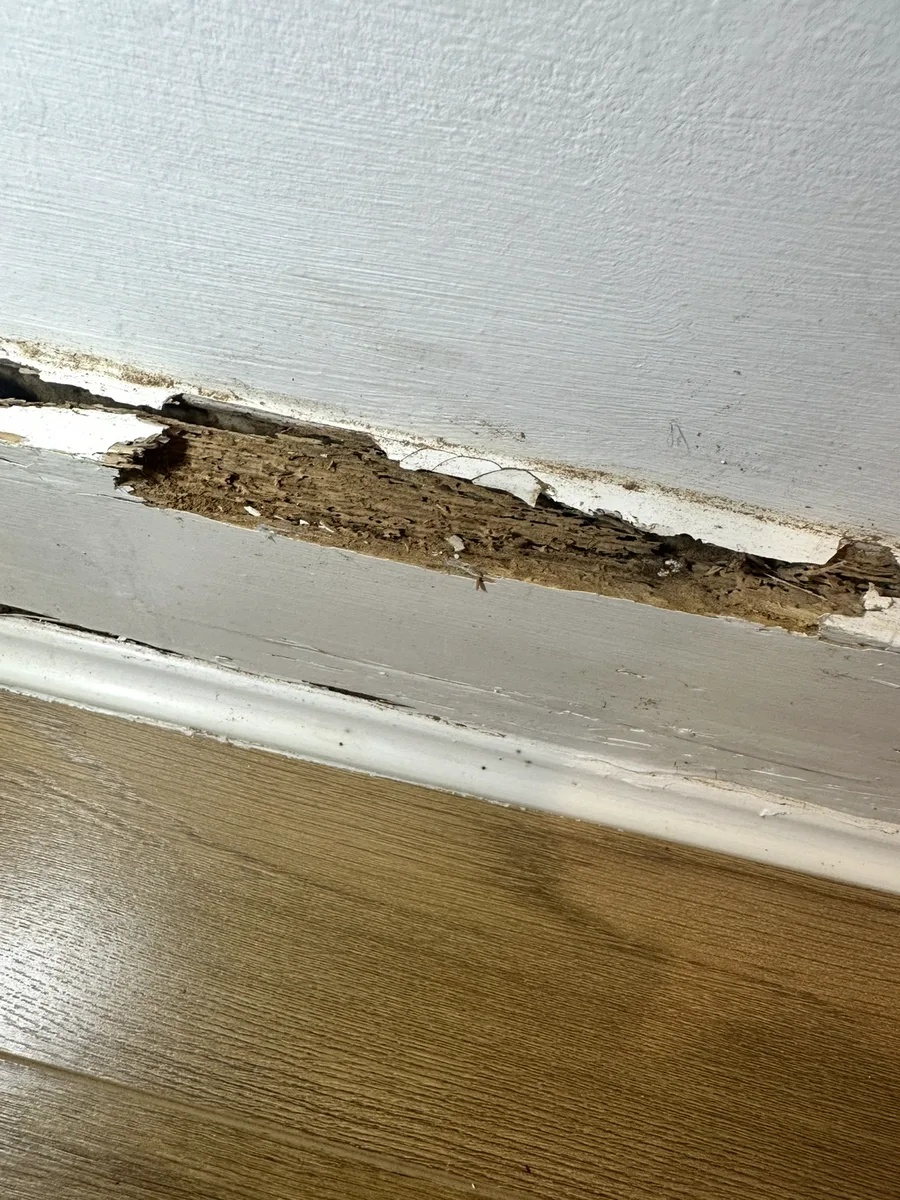
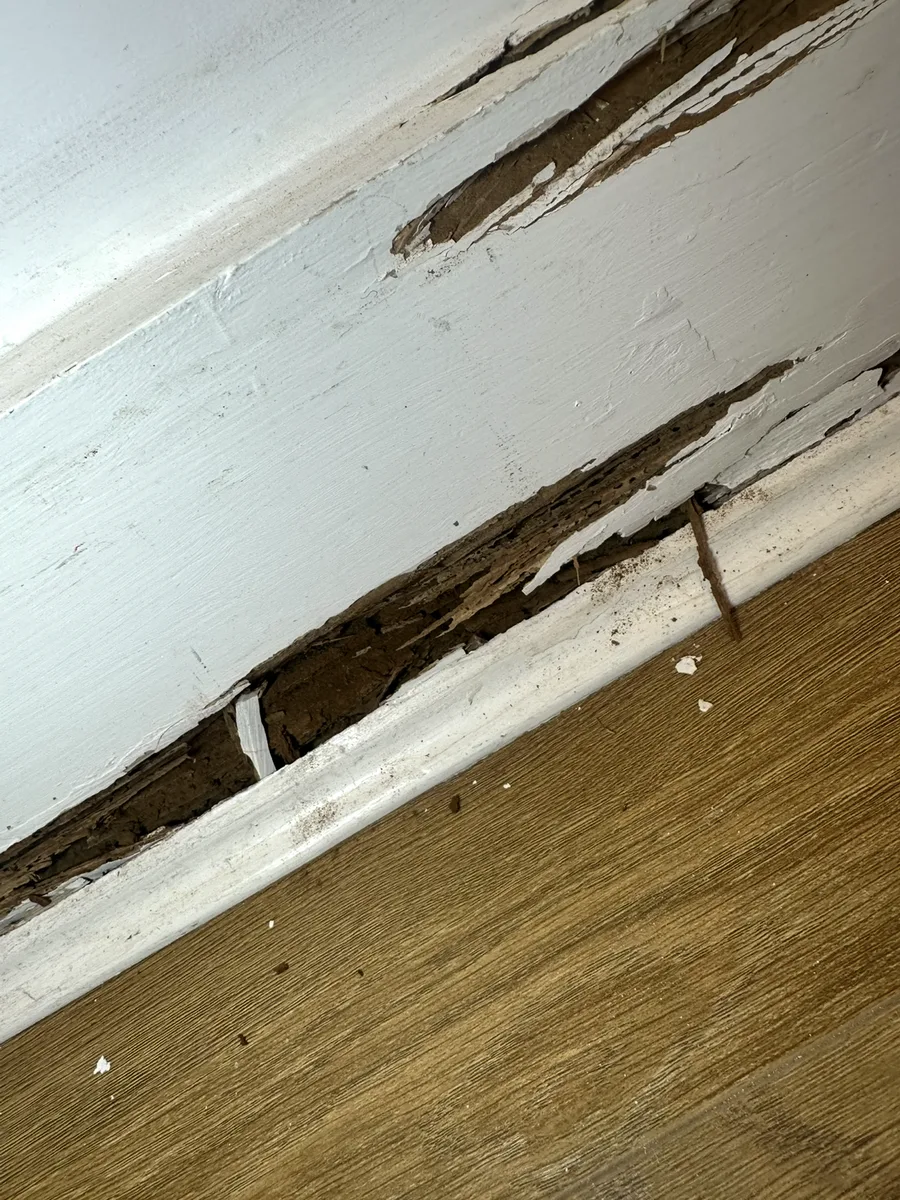
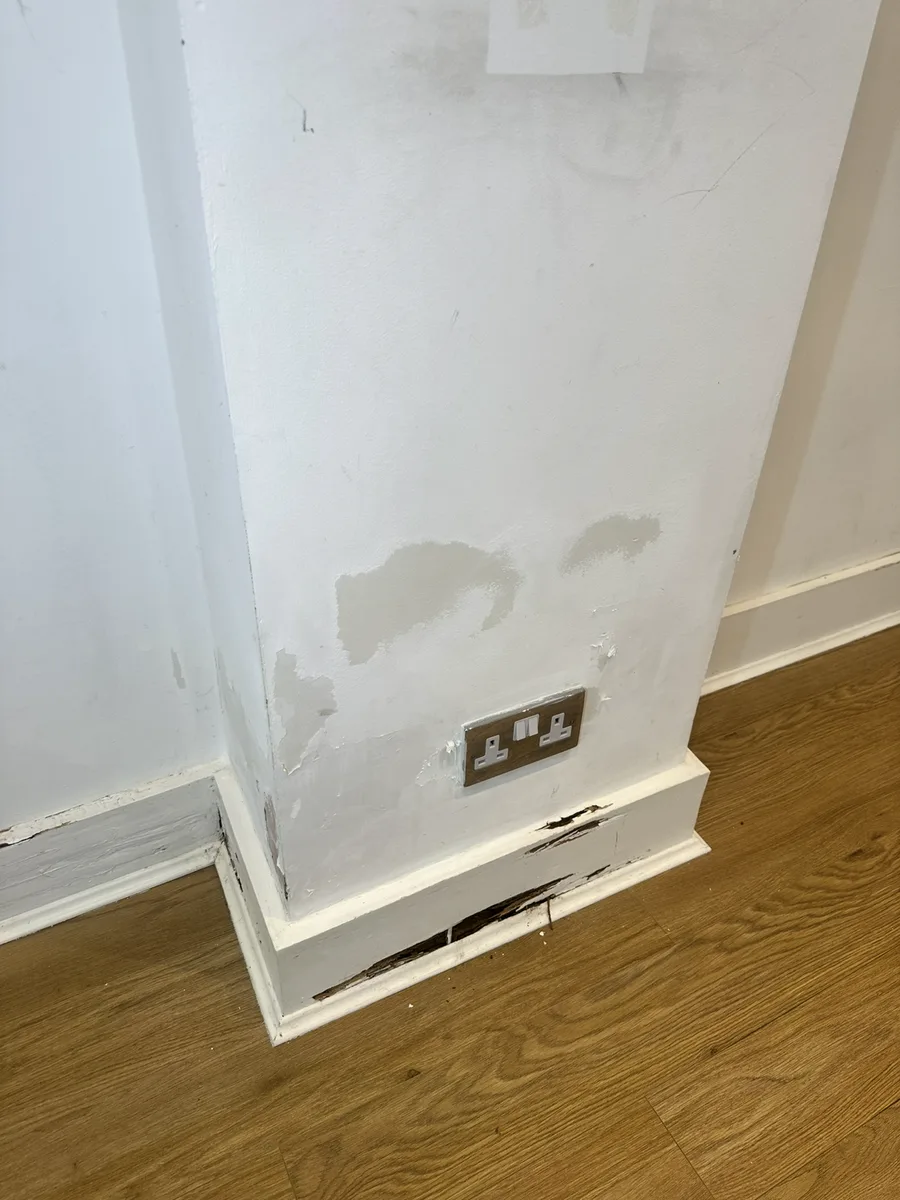
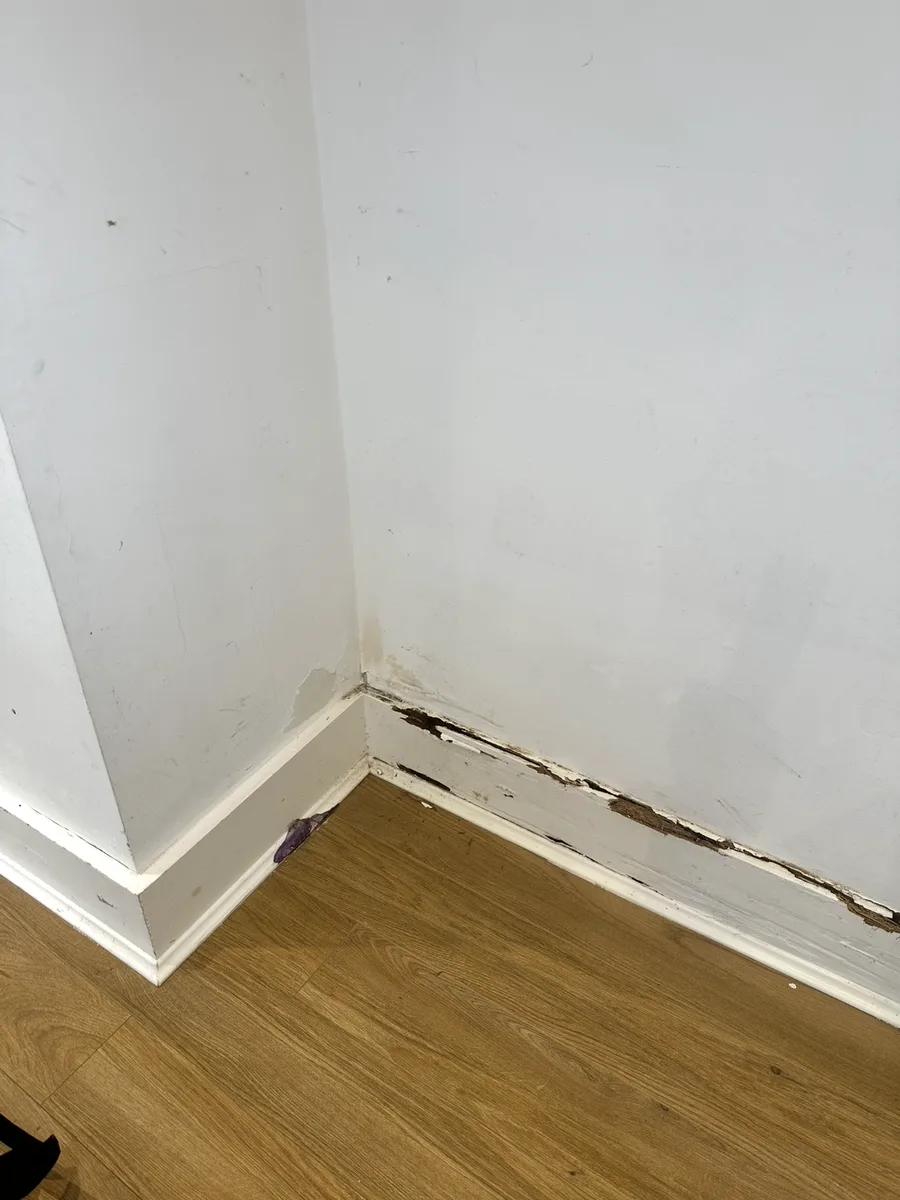
Timber decay and signs of woodworm after prolonged damp.
These photographs from a Wandsworth property show deteriorated skirting boards and signs of woodworm damage where timber had remained damp for a prolonged period. The painted surface concealed more extensive damage beneath.
Decay beneath the paint
Loss of timber behind the painted surface shows why a cosmetic repair alone would not address the damage.
A closer look at the timber
The exposed timber shows deterioration and signs of wood-boring insect damage. Activity needs assessment rather than diagnosis from a photograph alone.
Damage along the skirting
Damage extends along the skirting, rather than being confined to a small surface blemish.
The surrounding wall
The wider view helps put the timber damage in context with the condition of the surrounding wall.
The corner junction
Further damage at the wall junction highlights the need to assess the extent of affected accessible timber.
Address the moisture, not just the damaged timber.
Prolonged damp can support fungal decay and conditions favourable to some wood-boring insects. An assessment considers the moisture source, the extent and soundness of accessible timber, and whether insect activity is current or historic before recommending drying, repairs, replacement or targeted treatment.
Holes and old damage do not, on their own, prove an active infestation. These photographs do not identify a particular insect or decay fungus, establish the condition of concealed joists, or show completed treatment. Painting over or filling deteriorated timber is not a substitute for investigating the cause.
New Malden · Loft survey example
Water ingress and an unventilated loft: conditions that put timber at risk.
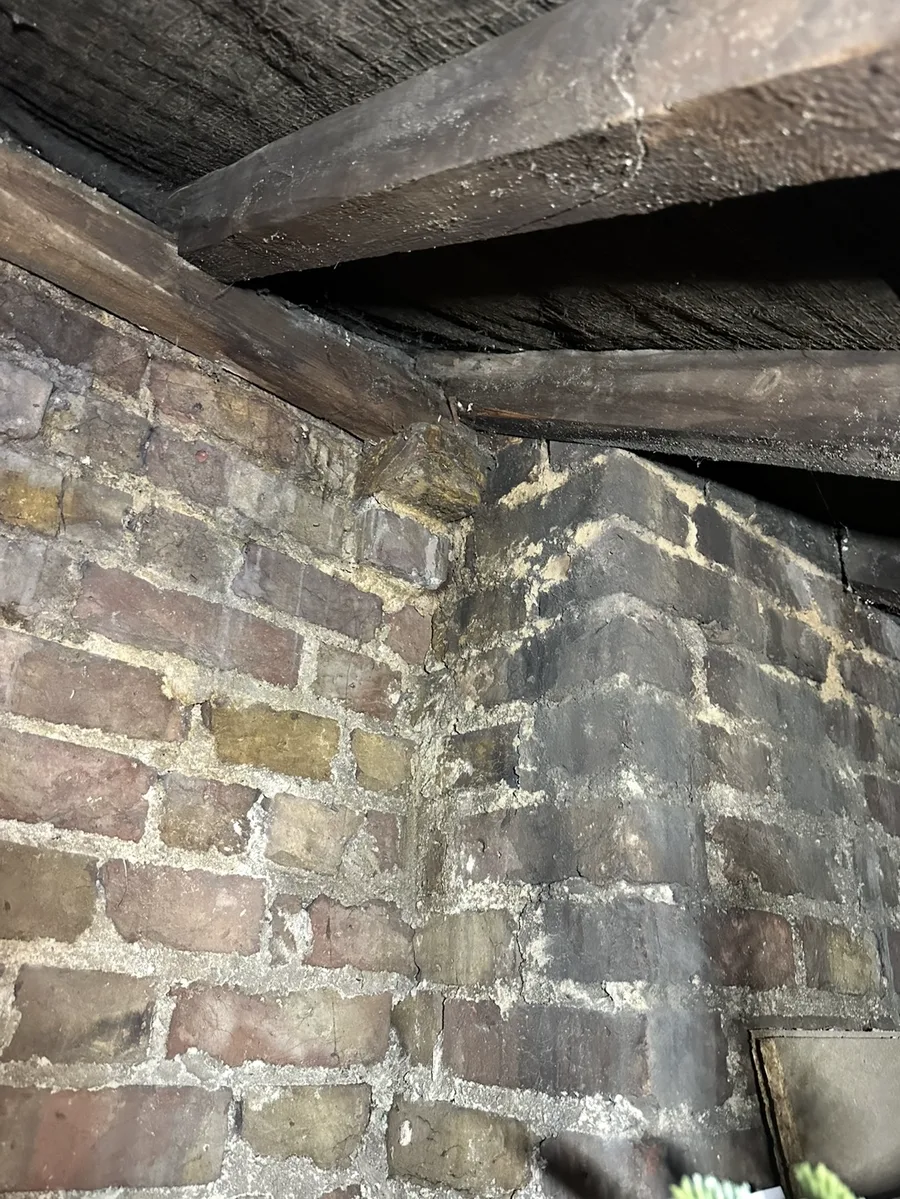
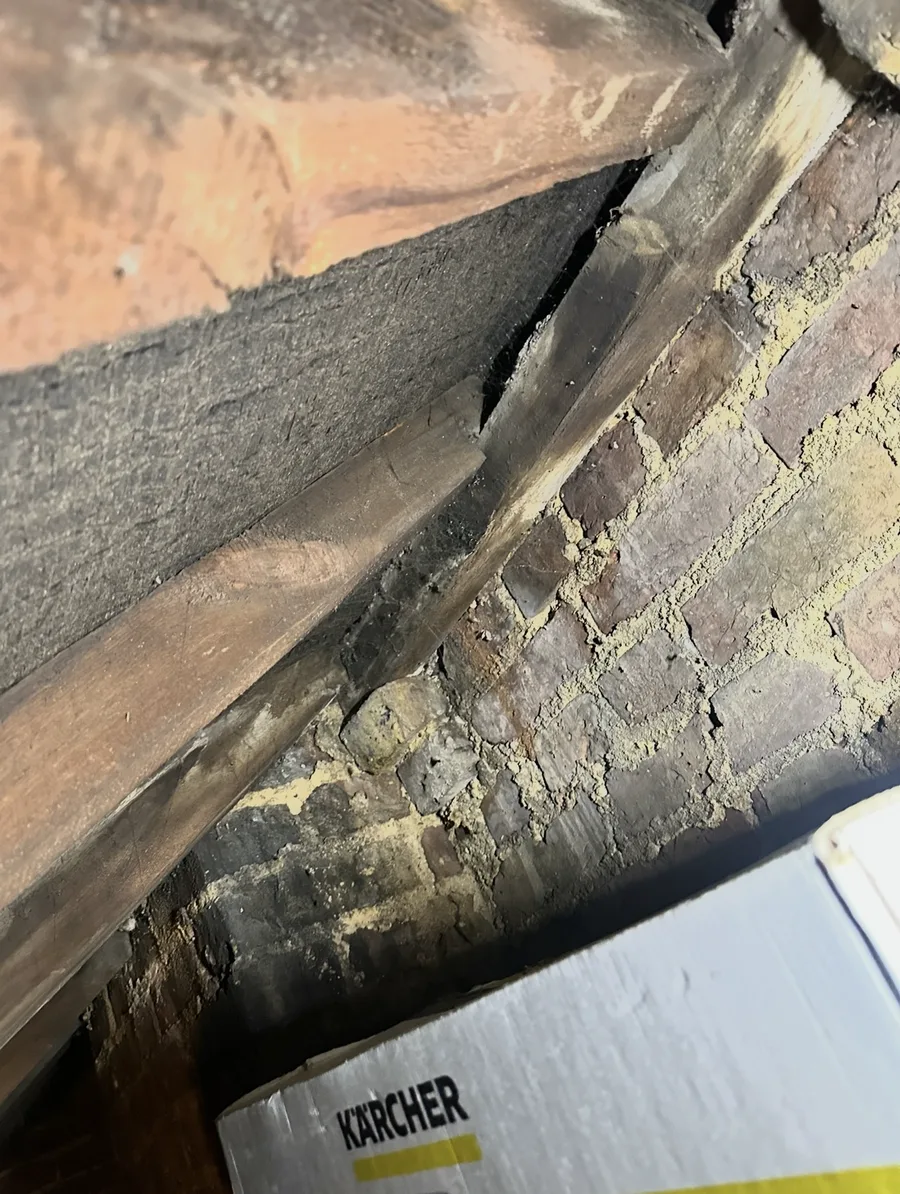
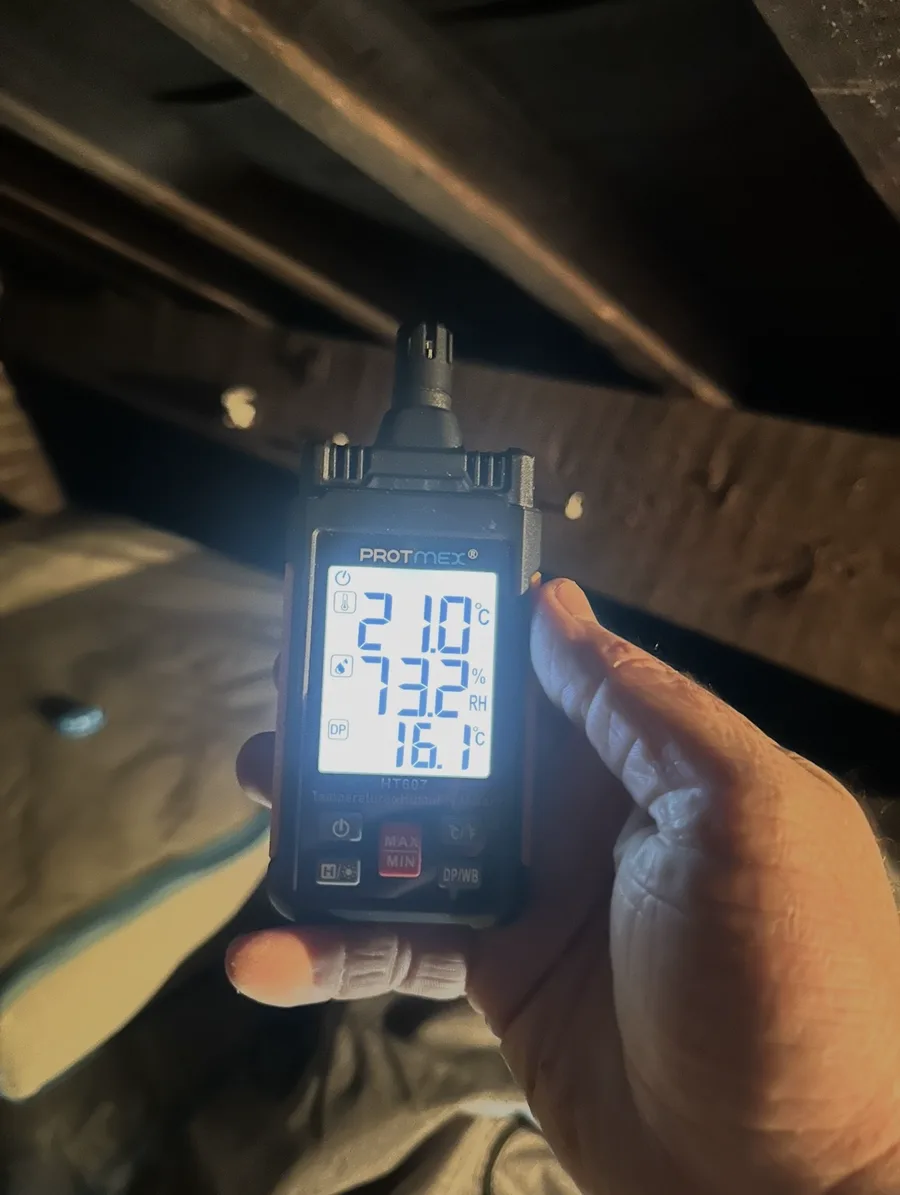
At this New Malden property, damp timber was associated with pointing and flashing details at a parapet wall. The loft also lacked ventilation, with elevated relative humidity recorded during the survey. Water entering from outside and limited drying within the roof space need to be considered together.
Timber and adjoining masonry
The loft timbers and adjacent masonry formed part of the investigation into moisture associated with the parapet wall.
The roof-to-wall junction
Pointing and flashing details at the parapet were identified as contributing to water ingress. These photographs show the internal area, not the external flashing.
Checking the loft environment
The meter shows 21.0°C, 73.2% relative humidity and a calculated dew point of 16.1°C at the time of inspection. These are air-condition readings, not timber moisture percentages.
How damp conditions can lead to fungal decay
Timber absorbs and releases moisture in response to its surroundings. A roof leak can wet it directly; prolonged humid conditions and poor air movement can slow drying. Condensation can add further moisture if a surface is cold enough.
If timber remains sufficiently damp, fungal spores can germinate and develop fine strands called hyphae. Timber-decaying fungi break down the wood’s structure to obtain nutrients, progressively reducing its strength. Moisture availability, temperature, the timber and the length of exposure all influence the risk.
“Dry rot” still needs moisture
Despite its name, dry rot needs damp conditions to establish and remain active. It is caused by a specific fungus, Serpula lacrymans, and can develop in poorly ventilated voids where susceptible timber stays damp. Other fungi cause wet rot; surface mould is not, by itself, proof of either type of structural decay.
These photographs show risk conditions, not a confirmed dry rot diagnosis. Identifying decay requires assessment of the timber, moisture conditions and any fungal evidence. An air-humidity reading alone cannot establish timber moisture content or identify a fungus.
What the humidity reading means
The recorded 73.2% relative humidity is a snapshot, not a long-term log. At the measured air temperature, the displayed dew point was 16.1°C: surfaces at or below approximately that temperature could experience condensation under those conditions. The photograph does not establish that the timber actually reached that temperature or that condensation occurred.
Repair the source and support drying
The next steps are to assess and rectify the parapet pointing and flashing defects, consider ventilation appropriate to the roof’s construction, and monitor drying. Accessible timber should be checked for decay and loss of strength, with further access or structural advice where needed. Chemical treatment is not a substitute for stopping water ingress and controlling moisture.
Roof ventilation must suit the complete roof build-up; adding vents indiscriminately is not the answer for every roof. This example records findings, not completed repairs or confirmed fungal eradication.
Do woodworm holes prove that an infestation is active?
No. Old flight holes can remain long after activity has stopped. The condition of accessible timber and other available evidence need to be assessed before deciding whether further investigation or treatment is justified.
Can a survey confirm the condition of hidden floor joists?
Only accessible areas can be assessed during the visit. Concealed timber may need agreed opening-up or further access before its condition can be established. A non-invasive inspection is not a guarantee that hidden timber is sound.
Why investigate moisture when timber is decaying?
Leaks, poor sub-floor ventilation and other moisture sources can sustain timber decay. Treating a surface without addressing those conditions may not resolve the problem. Structural concerns may also need separate specialist assessment and repairs.
Full damp & timber survey
Start with a survey for timber assessment.
A proper investigation and a photographic written report — so whatever you spend next is spent on the actual cause. Contact us to discuss the current survey fee and availability.