Staining beside windows, chimneys or external walls
Defective gutters, downpipes, pointing or render
How we approach it
01Compare the internal marks with the relevant external building details.
02Look at drainage, roof details, rainwater goods, masonry and openings where accessible.
03Recommend repairs in a practical sequence, allowing for drying before redecoration.
Understanding damp · Moisture and salts
What are hygroscopic salts and salt contamination?
Hygroscopic salts are salts that attract and absorb water vapour from the surrounding air. If they are present in masonry or plaster, they can make the material damp as indoor humidity rises—even when there is no new leak. “Atmospheric moisture” simply means moisture in the air around the wall.
How does salt contamination happen?
Salts may come from ground moisture, historic chimney deposits or materials within the building. Liquid water can dissolve soluble salts and move them through porous materials. When that water evaporates, salts remain within the wall or at its surface: this is salt contamination.
Certain chlorides, nitrates and sulphates are hygroscopic, but not all salts absorb moisture in the same way. At sufficiently high humidity, some take up enough water to dissolve; this is called deliquescence. The conditions depend on the salts, their mixture and temperature—not one humidity limit that applies to every wall.
Liquid water can transport dissolved salts; water vapour does not carry those dissolved salts through the wall. Once deposited, hygroscopic salts can absorb moisture from the air locally.
Patches can persist after a leak has been repaired.
Rainwater or a plumbing leak can dissolve salts already present in masonry and carry them into plaster and other finishes. Evaporation leaves those salts behind. If hygroscopic contamination remains, it can absorb water vapour from humid indoor air and produce recurring patches without fresh water necessarily entering at that moment.
That does not mean a repair has definitely worked—or failed. Continued water entry, slow drying and salt contamination need distinguishing through inspection and monitoring. Repair the source first, then assess drying and the affected finishes rather than repeatedly painting over them.
What signs can salt contamination cause?
Possible signs include recurring damp-looking patches, powdery or crystalline deposits, flaking paint and deteriorating plaster. Repeated salt crystallisation can damage porous finishes. A visible white deposit is often called efflorescence, but it does not identify the salt or prove that it is hygroscopic.
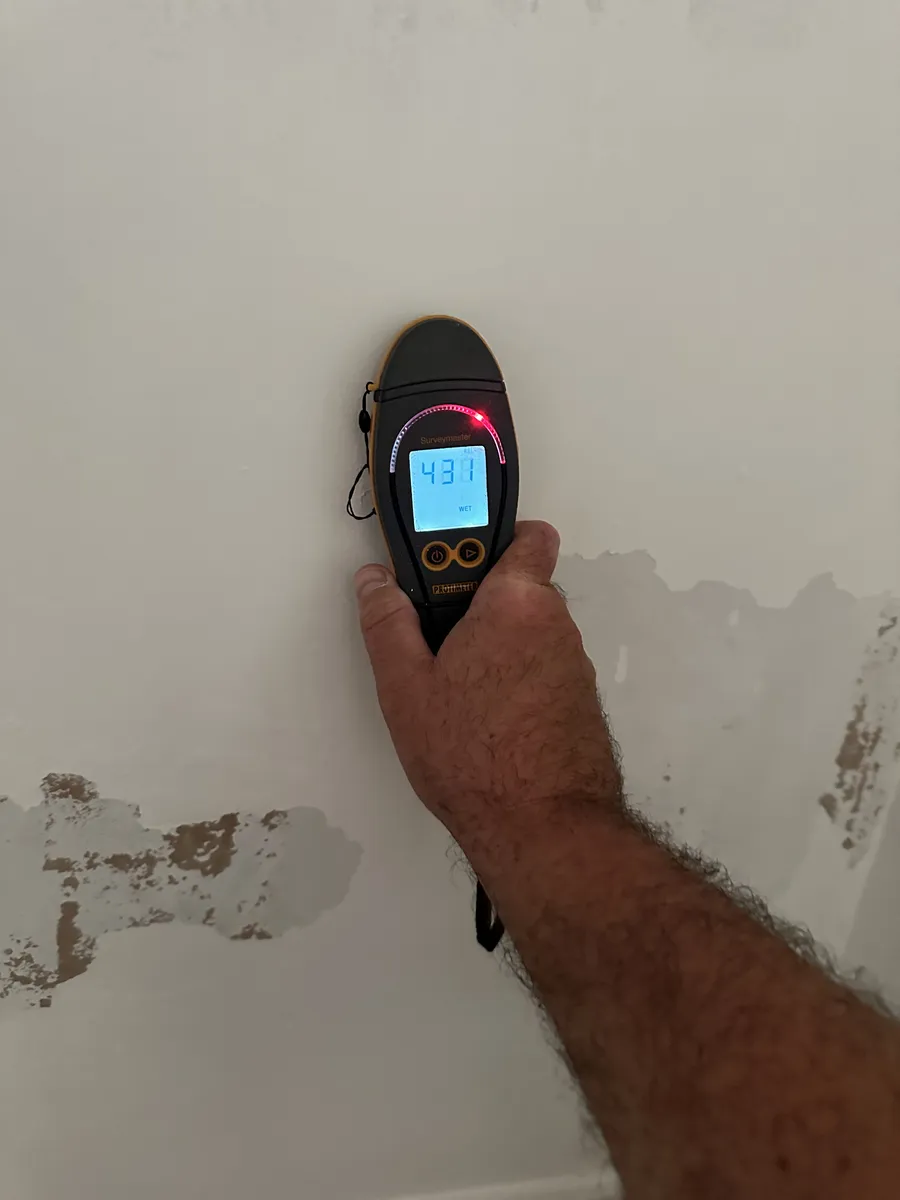
Salts can also influence electrical moisture-meter readings. We interpret readings alongside the building’s history, moisture sources and environmental conditions; material sampling or further testing may be needed. Depending on the findings, repairs can include removing contaminated finishes or specifying a suitable salt-isolation system—not simply another skim of plaster.
Further guidance: SPAB: Control of Dampness, including hygroscopic salts and the importance of distinguishing moisture sources.
Real photographs from DPS
What a penetrating damp investigation can involve.
These photographs from our work illustrate internal damage, external inspection and moisture checks. Identifying how water enters the building comes before choosing repairs or replacing damaged finishes.
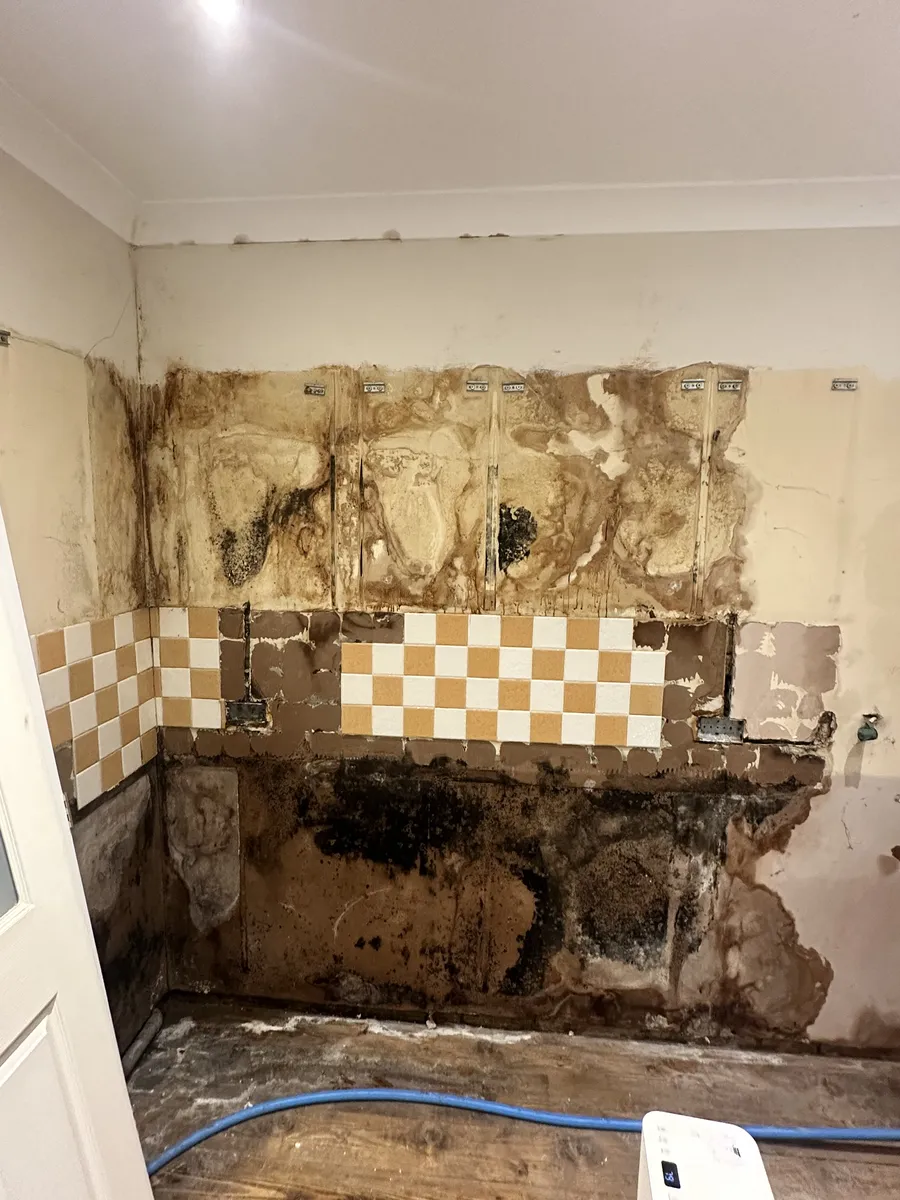
Damage exposed behind finishes
Removal of units and finishes can reveal the extent of staining that was previously concealed.
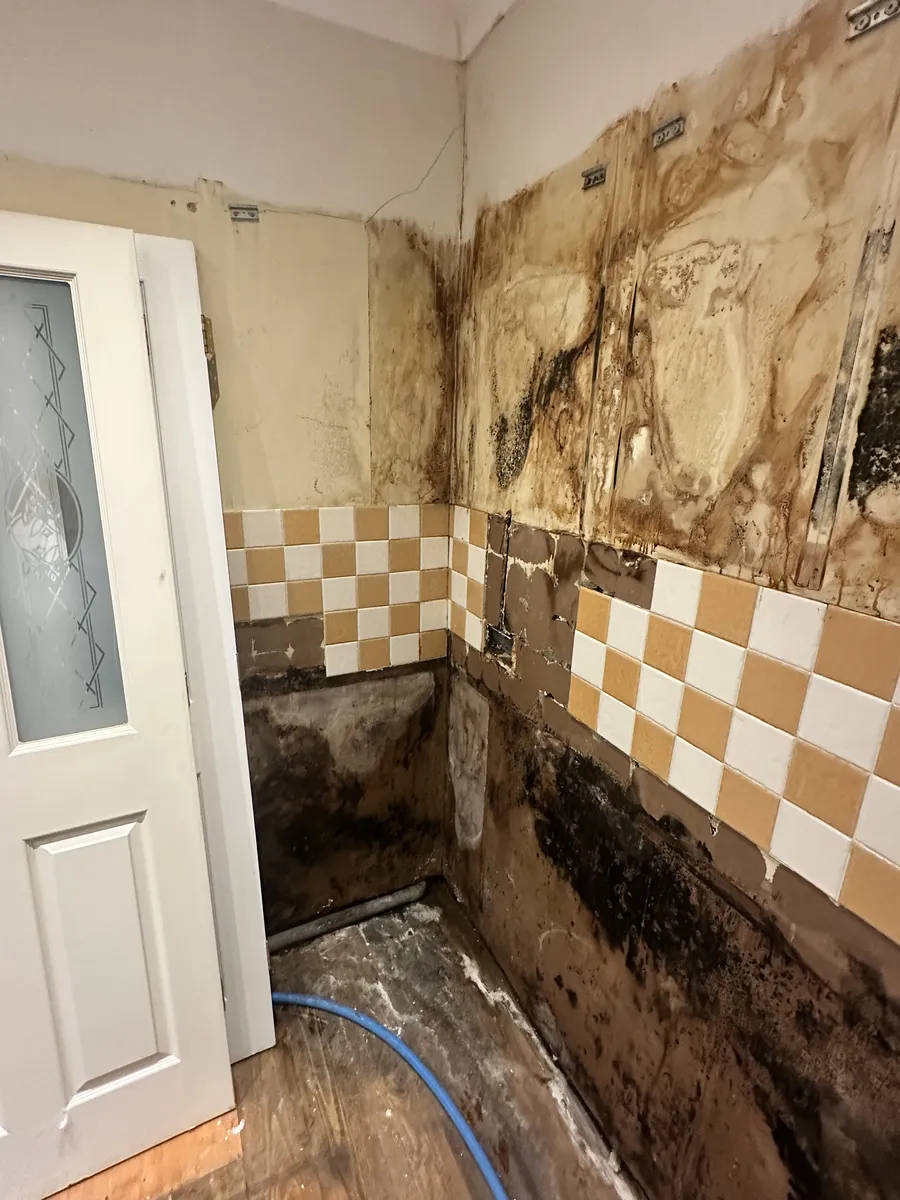
Checking the adjoining wall
Following the pattern around corners helps build a fuller picture of the affected area.
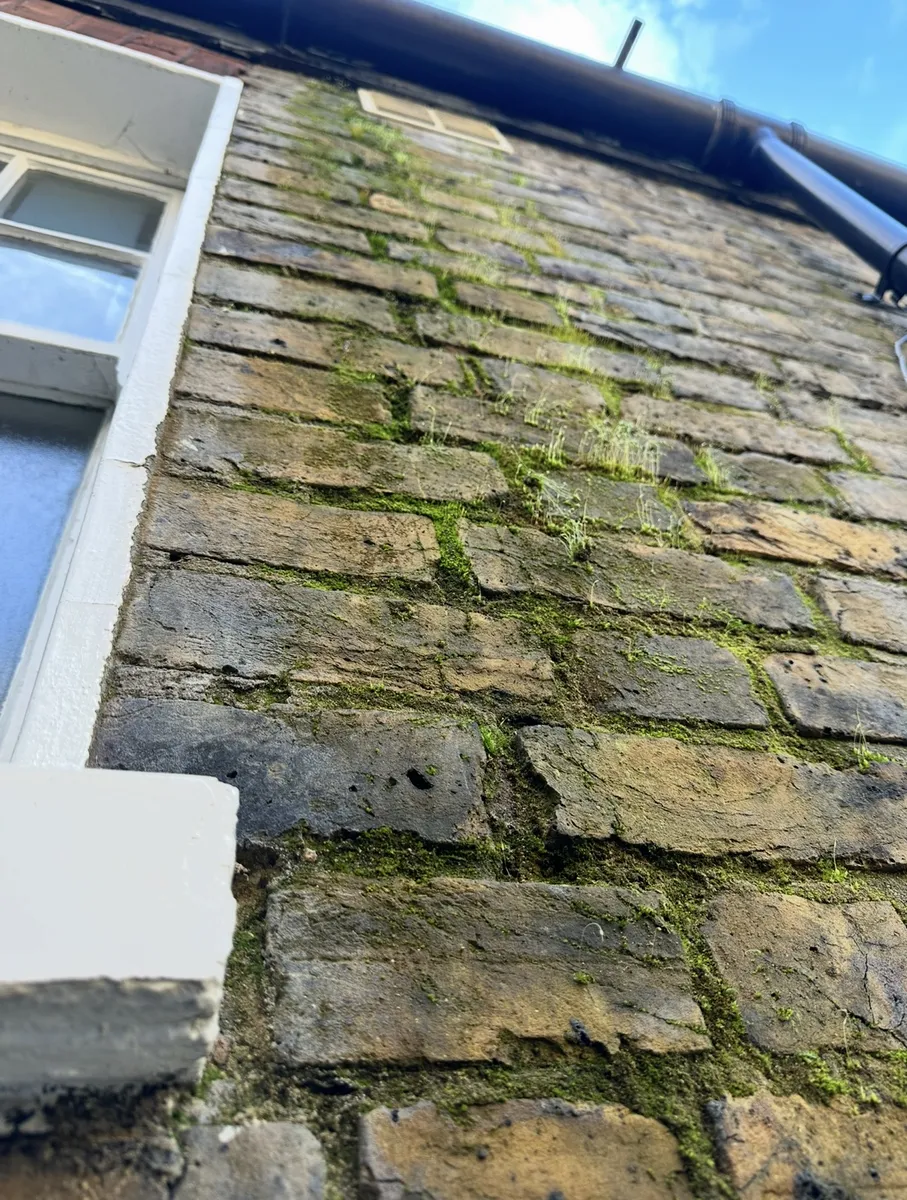
Inspecting the outside
Masonry, joints, window details and rainwater goods are considered together when investigating possible water entry.
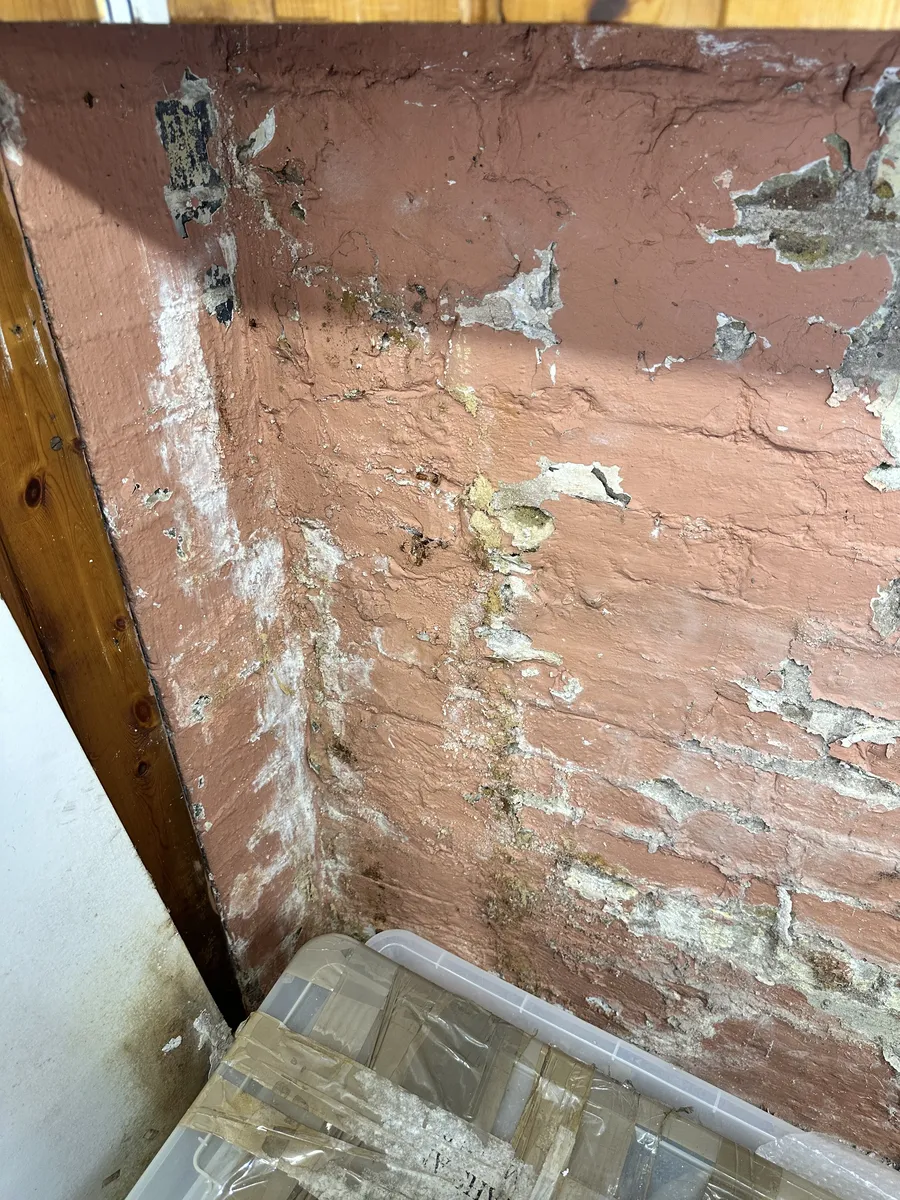
Deteriorating wall finishes
Flaking coatings and deposits are recorded alongside other evidence rather than used alone to diagnose the source.
Supporting moisture checks
Meter readings support the wider inspection. A single reading does not establish the cause of damp or give a reliable masonry moisture percentage.
These are examples, not a before-and-after sequence or a claim that every photograph is from the same property. Photographs alone cannot confirm the route of water entry.
Practical advice · Real survey videos
What to look out for when it rains.
Rain can reveal defects that are harder to spot in dry weather. These two videos show external details worth observing when investigating penetrating damp. They are advice clips, not proof that every damp patch has the same cause.
Watching the building during rainfall
Wet-weather advice filmed outside a property, showing the roofline, guttering, downpipe and surrounding walls.
Advice from Damp Proofing Services London. Press play to watch with sound.
Looking closely at exposed brickwork
A closer look at high-level brickwork and the junction with the adjoining roofline during wet weather.
Advice from Damp Proofing Services London. Press play to watch with sound.
A simple wet-weather checklist
Gutters: look for overflowing water, drips at joints or rain spilling behind the gutter instead of reaching the downpipe.
Downpipes and gullies: watch for leaking joints, water running down the wall or pooling near the base. Blockages and poor drainage need investigation.
Roof and wall junctions: note visible defects around flashings, abutments, parapets and chimney brickwork. Defects at height may need a closer professional inspection.
Brickwork, pointing and finishes: look for open joints, cracks and damaged coatings, and note where walls stay wet after the rain stops. Wet masonry alone does not establish the source of internal damp.
Inside the property: photograph any patches that appear or worsen after rain, and record the date and affected room. This helps us compare internal symptoms with possible external entry points.
Stay at ground level. Only observe from a safe, sheltered position. Do not climb ladders, access roofs, lean out of windows or touch wet electrical fittings. Leave high-level checks and repairs to a suitable professional.
Rain-related staining is a useful clue, not a diagnosis. A survey considers the pattern of moisture, the building’s construction and other potential causes before recommending repairs.
What is a French drain, and why might you install one?
A French drain is a gravel- or stone-filled trench, often containing a perforated drainage pipe. It collects water from the surrounding ground and directs it towards a suitable outlet, rather than letting it accumulate beside the building. It is a drainage measure—not a waterproof coating or a replacement damp-proof course.
When can it help?
Intercepting water moving through the ground or running down sloping land towards a property.
Reducing persistent wetting of soil beside walls where the investigation identifies external drainage as a contributing cause.
Helping manage local waterlogging as part of a properly designed drainage scheme.
A suitable system can reduce the moisture load on the building and support drying after repairs. It cannot guarantee that an already damp wall will dry immediately, remove salt contamination or resolve unrelated roof leaks and condensation.
The water needs somewhere suitable to go.
A functioning drain needs an appropriate route, capacity and lawful discharge point. Depending on the site, that may involve an assessed infiltration system or an authorised drainage connection. Ground conditions, levels and any required permissions need checking first.
A trench full of gravel with no effective outlet can hold water beside the house and make damp worse. Clay soils, a high water table, poor falls or a blocked pipe can limit performance. Simply digging a trench around the walls is not a reliable solution.
What should be assessed before installation?
The actual moisture source: leaking gutters, poorly discharged downpipes, high ground levels or defective drains may need a different repair. Roof water should be managed through a suitably designed rainwater system, not casually emptied beside the wall.
Foundations and stability: excavation near shallow foundations, retaining walls or neighbouring structures can be risky. Changes to ground moisture can also affect movement-sensitive soils. Position and depth require site-specific assessment, not a standard DIY dimension.
Building details and buried services: preserve damp-proof course clearances and subfloor ventilation; locate underground services before excavation.
Access and maintenance: suitable filter materials can help control silt, but do not make a drain maintenance-free. Provide inspection and cleaning access; check the system at least annually and after problems or heavy rainfall.
A French drain is also different from a simple gravel margin or an open channel used to keep raised ground away from a wall. Those details serve different purposes. In some buildings, adjusting ground levels or providing an accessible open drain may be more appropriate than a buried French drain.
We assess external drainage alongside the construction and internal damp pattern before recommending next steps. Where needed, specialist drainage or structural design should establish whether a French drain is suitable. It is not an automatic treatment for every low-level damp patch.
The linked surveys illustrate external moisture problems, not completed French drain installations. Further guidance: SPAB: Control of Dampness, section 6.3.1 on groundworks and improved drainage.
Survey example · Wandsworth
When a garden wall keeps the house wet.
A retaining garden wall abutting the house, retained soil and rainwater from a gutter and downpipe were contributing to internal damp on this survey.
Plasterboard over a damp wall: why patches can return.
Covering damp masonry with dot-and-dab plasterboard does not repair the source. Read how liquid moisture and dissolved salts can affect the finish, why condensation and mould can develop behind a lining, and when damaged boards need replacing.
Old chimney salt contamination is not rising damp.
Hygroscopic salts in existing or former chimney masonry can attract moisture from indoor air and spoil new plaster. Read the signs, why ordinary replastering may fail again, and how a suitable flexible plaster membrane can isolate the finish—after leaks and other causes have been checked.
We investigate roof leaks and unresolved damp at any stage, combining internal testing with checks of gutters, leadwork, flashings, brickwork, coping stones, render and water discharge details. Drone inspection and controlled water testing can support the investigation where appropriate.
Receive a detailed photographic report and evidence-led repair priorities, with drone photographs and video where a flight is carried out. Post-repair revisits can be arranged to check accessible repairs and follow up internal conditions. A complete re-roof is not always necessary; several minor defects can contribute to one significant damp problem.
Repair advice and internal renovation work in Mortlake.
We advised which repairs the freeholder needed to arrange and carried out the internal plaster removal and renovation plaster work, leaving the customer’s plasterer to complete the skim.
A Chiswick survey example shows weathered brick joints and explains why incompatible hard cement-rich pointing can affect movement and drying in older solid walls.
Brick cleaning, paint removal and lime repointing.
Where unsuitable coatings, damaged bricks or incompatible pointing contribute to persistent wetting, compatible brick restoration can help the wall shed rain and dry. Explore the benefits, practical limitations and our explainer video.
How can I tell whether rain is getting into the wall?
Patches that appear or worsen after rain are useful evidence, particularly near windows, chimneys, roof junctions or defective rainwater goods. Photograph the changes and record the weather. Those observations help the investigation but are not a diagnosis on their own.
Does the survey include looking outside?
Yes. Accessible external checks are part of the damp and timber survey, alongside the internal moisture pattern. Restricted access or concealed defects may mean further access or specialist investigation is needed before the water-entry route can be confirmed.
Can I repaint as soon as the leak is repaired?
A repaired water-entry route does not mean the wall is immediately dry. The material, extent of moisture and salt contamination affect the next steps. We explain the recommended repair and drying sequence rather than advising you to cover an unresolved problem.
Full damp & timber survey
Start with a survey for penetrating damp.
A proper investigation and a photographic written report — so whatever you spend next is spent on the actual cause. Contact us to discuss the current survey fee and availability.