Drone roof surveys & high-level inspections in London
Roof leak investigations and drone surveys, bringing together internal testing and visible roof, gutter and high-level details to explain persistent damp and guide appropriate repairs.
Concerns about roof coverings, chimney details or flashings
High-level gutters, parapets and masonry that need a closer look
How we approach it
01Review the symptoms, repair history and internal conditions to agree a suitable investigation scope.
02Inspect accessible roof and rainwater details, supported by indoor testing and drone views where appropriate and permitted.
03Bring the evidence together in a detailed report, with repair priorities, any further investigation needed and the option to arrange post-repair checks.
Roof leaks · Unresolved damp · Post-repair checks
Roof leak investigations—even after previous repairs.
Concerned about a roof leak, a roofing defect or damp that has continued despite repairs? We can assist at any stage to establish what is happening and advise on a repair process aimed at a lasting solution.
A drone is one tool in the investigation, not the whole service. We look at how the roof, rainwater system and building fabric relate to the symptoms inside. Several small defects can combine into one substantial internal damp problem, so the investigation should consider the relevant details together.
A thorough inspection, not repeated guesswork.
Stage 1
Understand what has happened
We review the affected rooms, when symptoms appear, previous roofing work and any existing reports. We can assist before repairs are chosen, while an issue remains unresolved, or after work has been completed.
Stage 2
Connect the internal and external evidence
A thorough inspection brings together accessible roof and rainwater details with tests inside the property. Moisture measurements, humidity and temperature checks, and thermal imaging where appropriate help assess the pattern. Drone views can reveal high-level details where safe flight and permissions allow.
Stage 3
Test relevant details where appropriate
Where justified, safe and agreed, controlled water testing can help investigate a suspected entry route or rainwater defect. It is not suitable for every roof or situation. Thermal images and drone photographs are interpreted alongside the other evidence, not treated as proof of a leak on their own.
Stage 4
Set out the repair priorities
We explain the findings, the repairs supported by the evidence and the best order to carry them out. Where something remains concealed or unconfirmed, we say so and advise what further access or investigation would help, rather than recommend repeated speculative repairs.
A detailed report, with the evidence.
You receive a detailed written report with photographs of relevant findings, test results, inspection limitations and recommended next steps. Where a drone inspection is carried out within the agreed scope, its photographs and video support the findings.
A gutter-condition report covers the inspected sections and any observed defects or discharge concerns. Where water testing is applicable and carried out, the method and findings are recorded so the repair advice can be understood alongside the evidence.
Follow-up after repairs.
We can arrange a revisit after your roofing repairs to review accessible repair details, repeat relevant checks and follow up internal moisture conditions. This helps assess whether the identified issues have been addressed and whether the property is drying as expected.
Wet materials can take time to dry. We consider residual drying alongside signs of continued water entry rather than assume that a remaining stain proves a repair has failed. Findings reflect the accessible conditions at the time of inspection; follow-up scope and fees are agreed in advance.
You do not always need a complete re-roof.
Sometimes a handful of localised defects are contributing to one large damp issue. Sometimes more extensive work is justified. An experienced assessment helps distinguish the two and gives you evidence for a proportionate repair plan. Our aim is to minimise avoidable surprises by investigating properly from the beginning—not by asking you to pay for one speculative fix after another.
Roof investigations, drone flights, water testing and post-repair visits are scoped and priced by arrangement, separately from the standard damp and timber survey. Inspection cannot establish the condition of all concealed materials or guarantee future leak-free performance.
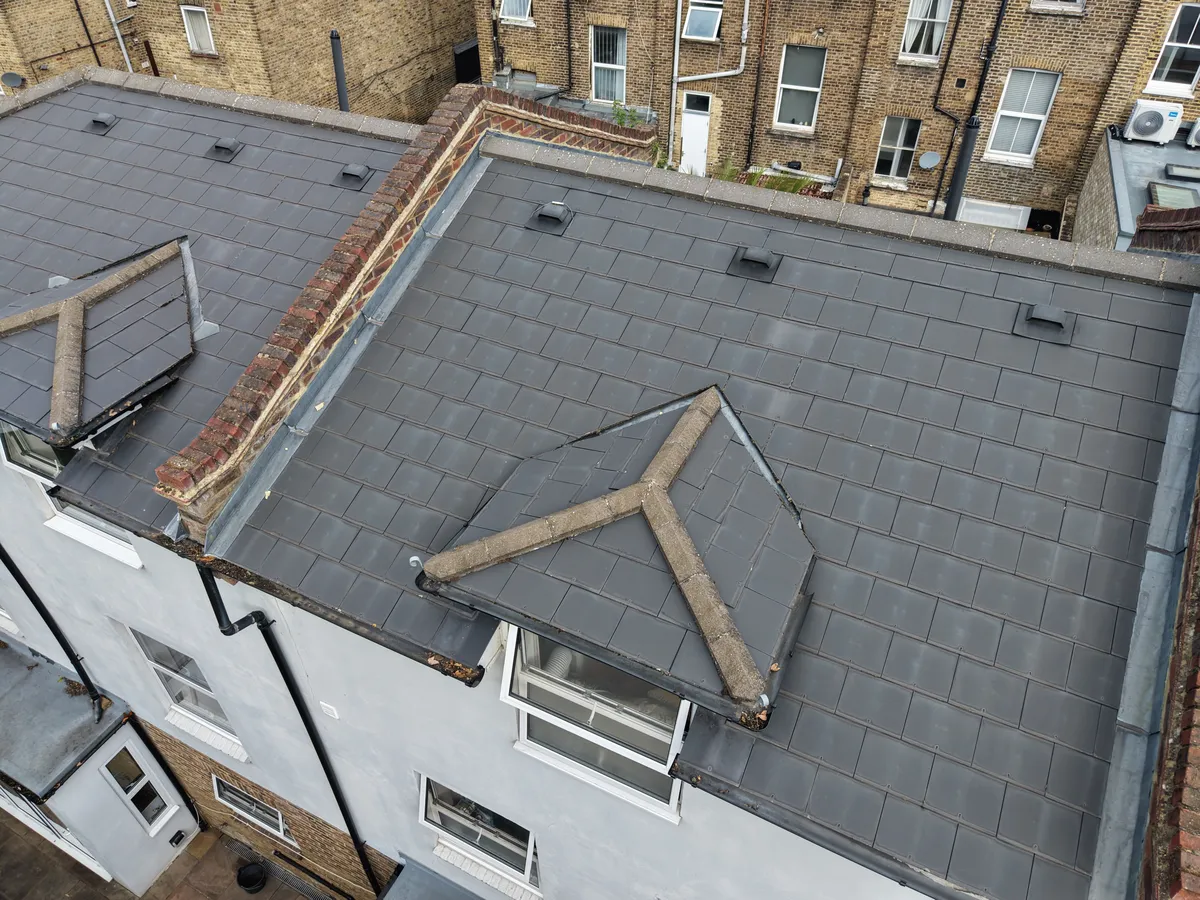
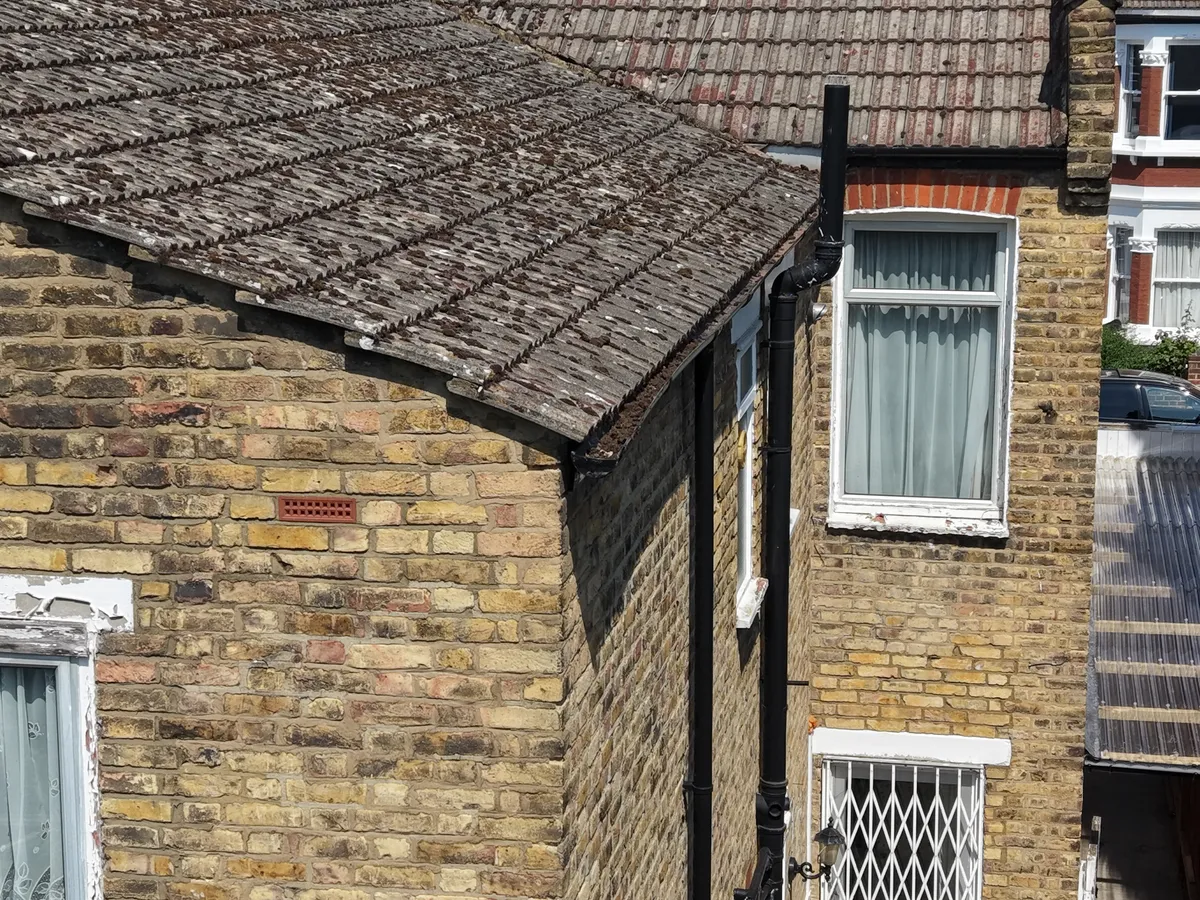
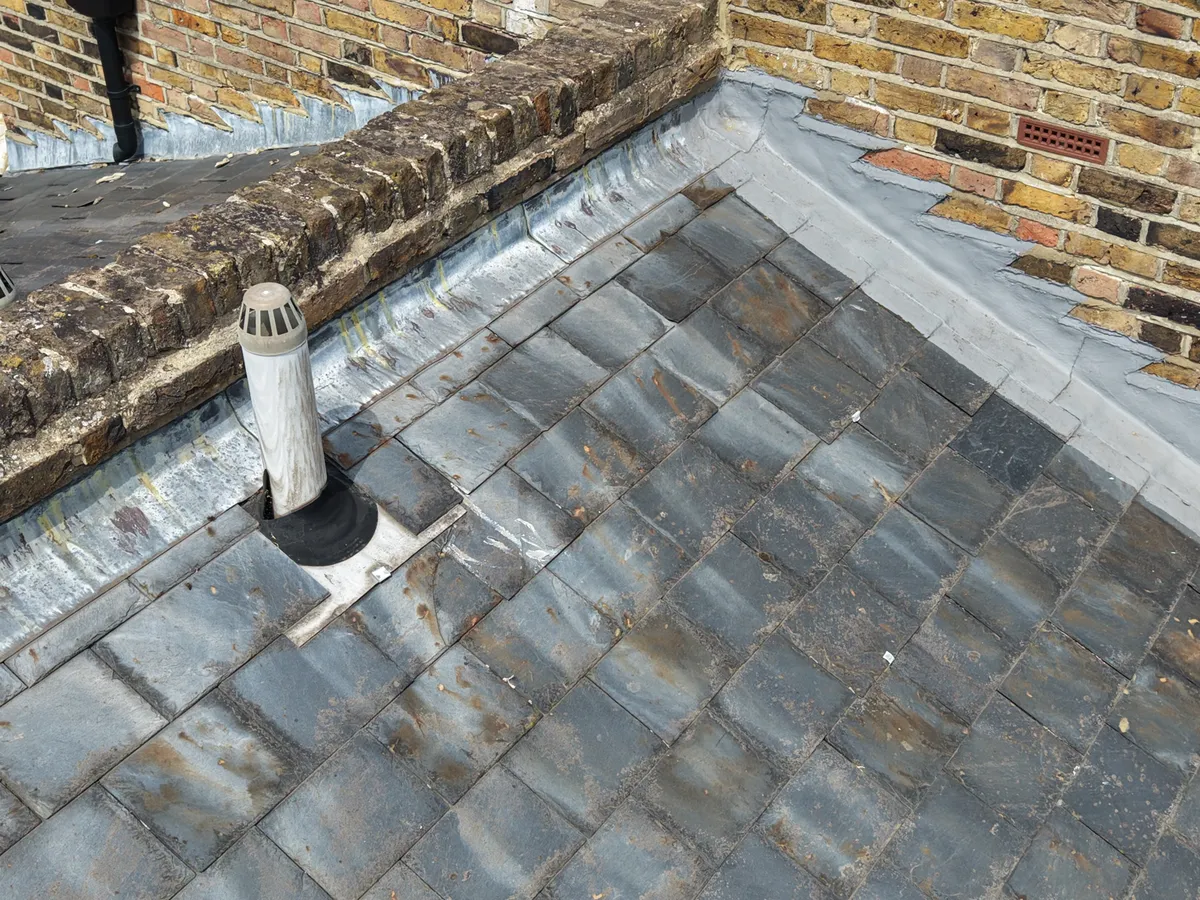
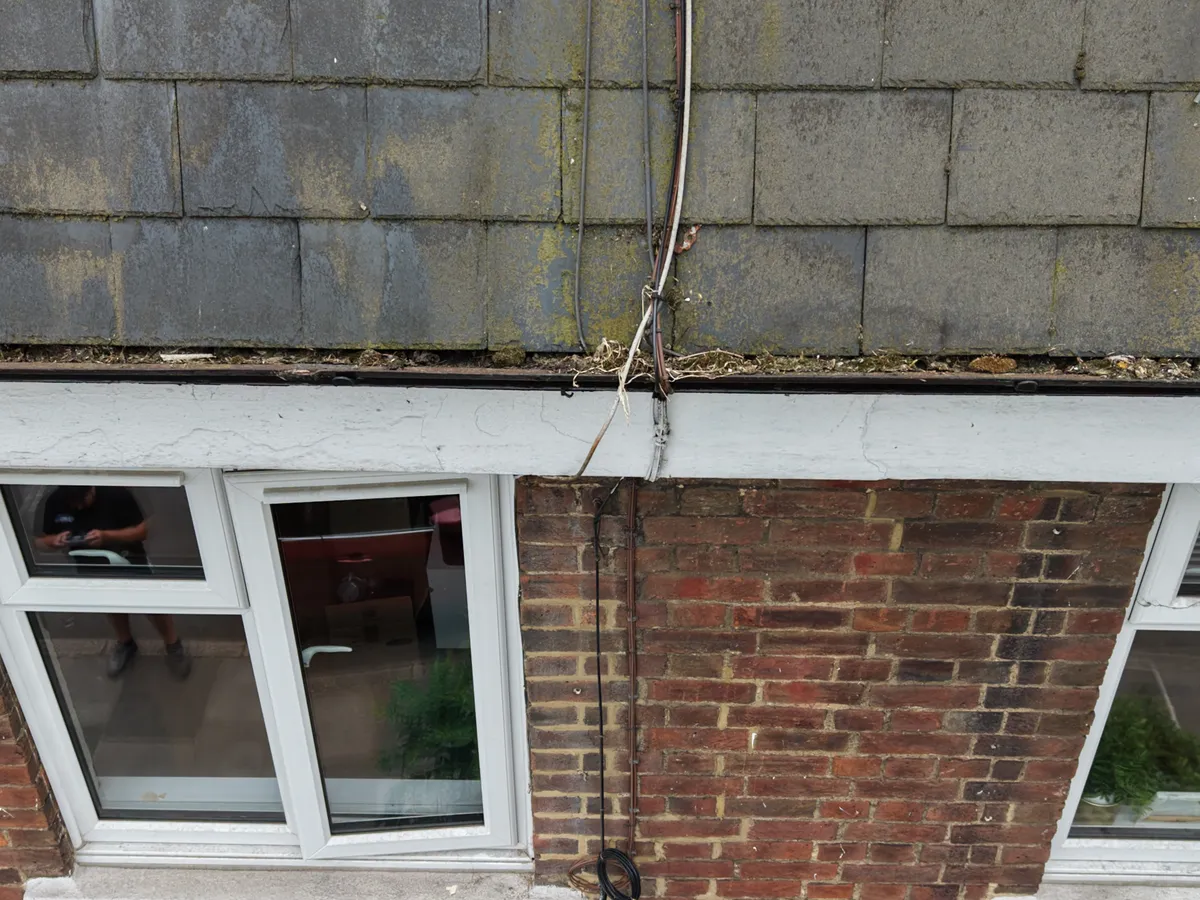
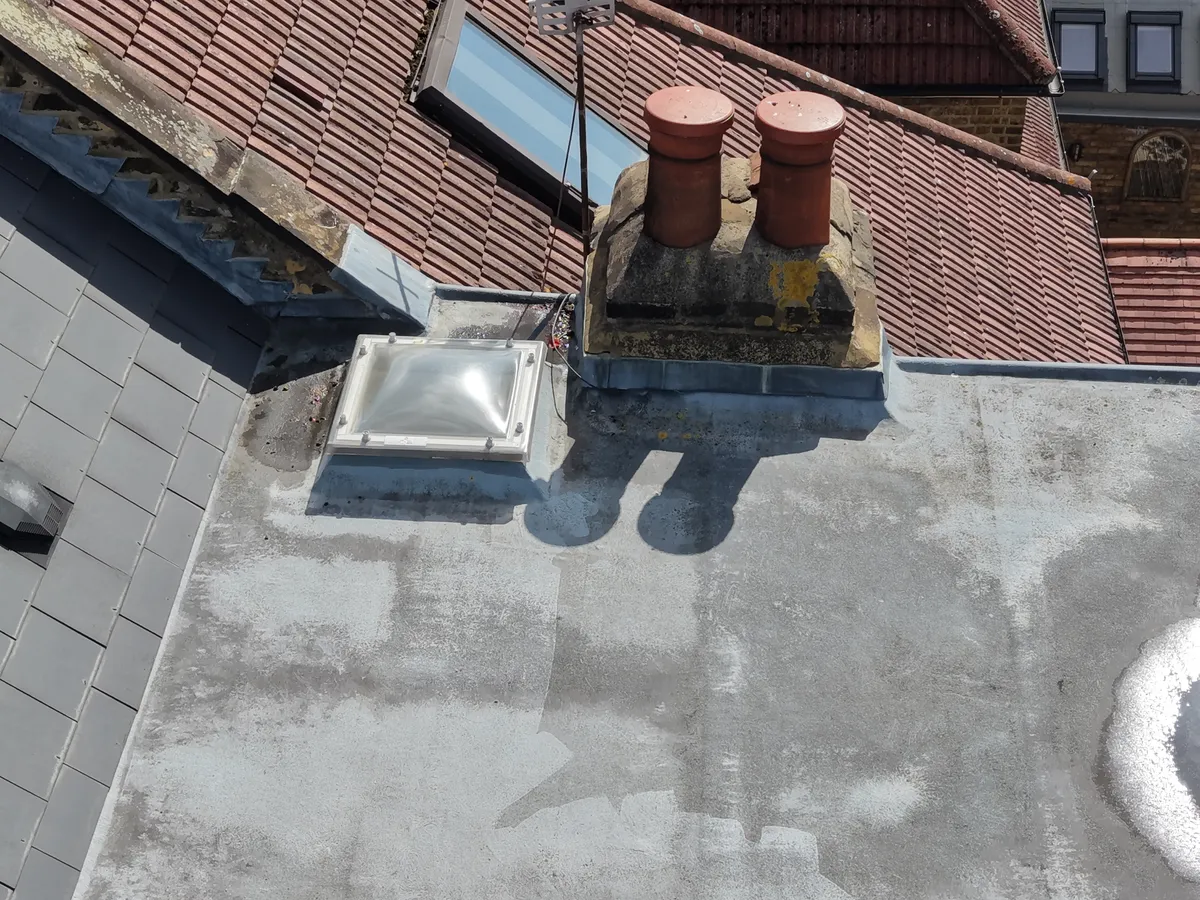
Our drone inspection photographs show the roof coverings, junctions and rainwater details that can be difficult to assess from ground level.
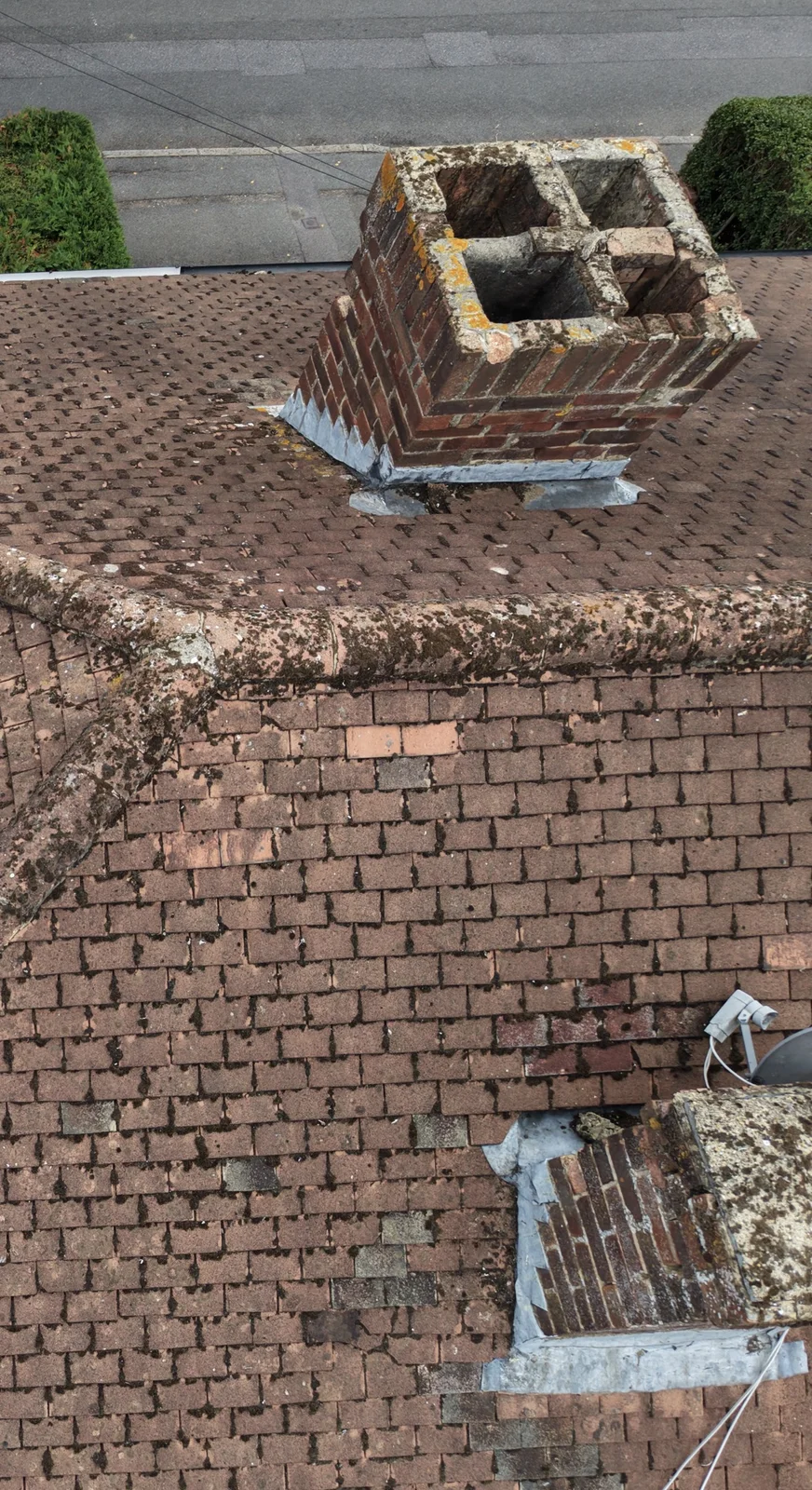
A Coulsdon inspection example: chimney openings exposed to the elements. This photograph shows an observed condition, not a completed repair.
Roof inspection example · Coulsdon
An open chimney can let rain into the building.
This chimney on a property in Coulsdon has open flue openings exposed to the weather. Rain can enter these openings and wet the chimney internally, potentially contributing to water ingress and damp in the property below.
Repeated wetting can also contribute to deterioration of mortar joints and brickwork. When saturated masonry freezes, expanding water can worsen cracking and spalling. The photograph illustrates a potential moisture route; it does not alone confirm the extent of internal damage or prove that this is the only source.
A thorough assessment considers the chimney top alongside its brickwork, pointing, flashings and the internal moisture evidence. Any weather protection or repair must suit whether the flues are in use and preserve necessary ventilation—not simply seal the openings without checking.
Examples from different inspections, not a before-and-after sequence. A photograph alone cannot confirm a leak source or the condition of hidden roof materials.
Survey example · Shepherd’s Bush
From moisture readings around a skylight to a closer roof inspection.
We used internal moisture readings, thermal imaging and external drone views to investigate an area of concern and advise the customer on next steps.
Can you help if roof repairs have not stopped the damp?
Yes. We can investigate before or after roofing work, reviewing the history, accessible roof and rainwater details, and internal conditions. Appropriate testing and drone views can help support a detailed report and proportionate repair advice. We explain remaining uncertainty rather than recommend repeated speculative fixes.
What evidence will I receive?
The agreed roof investigation includes a detailed photographic report of findings and recommendations, a gutter-condition report for inspected sections, and records of applicable testing. Where a drone inspection is carried out, photographs and video support the report. Inaccessible or concealed areas and any further checks needed are identified.
Can you return after my roofer has completed repairs?
Post-repair visits can be arranged to review accessible repair details, repeat relevant checks and follow up internal moisture and drying conditions. Scope and fees are agreed beforehand. A revisit records conditions at that time; it does not certify all concealed work or guarantee that no future leak will occur.
What can a drone roof survey look at?
Visible roof coverings, roof junctions, flashings, chimneys, parapets, gutters and high-level masonry can be viewed where conditions permit. Images help identify areas that may need closer investigation; they cannot establish the condition of concealed materials.
Is a drone inspection included in a damp survey?
Drone roof and high-level inspections are scoped separately. Please contact us to discuss suitability, the inspection scope and pricing.
Can every property be inspected by drone?
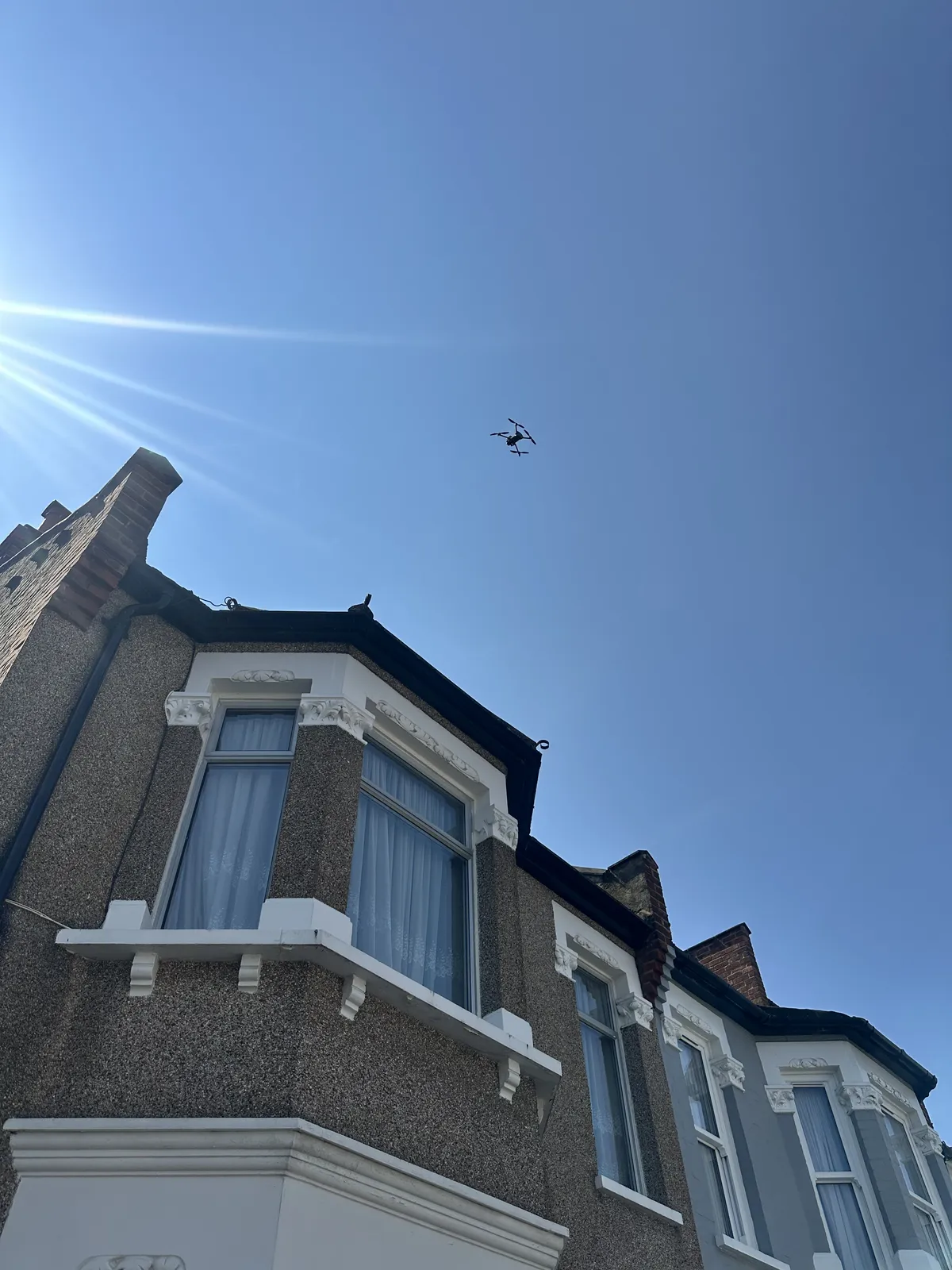
Not always. Weather, nearby buildings, flight restrictions, privacy and safe operating conditions can limit or prevent a flight. We discuss suitability before arranging the inspection, and further access may still be needed.
Discuss your property
Arrange a roof or high-level inspection.
Tell us the property location and what you would like inspected. We’ll discuss suitability, scope and pricing before arranging a visit.